
WCS-10 Compatibility: What You Need to Check First
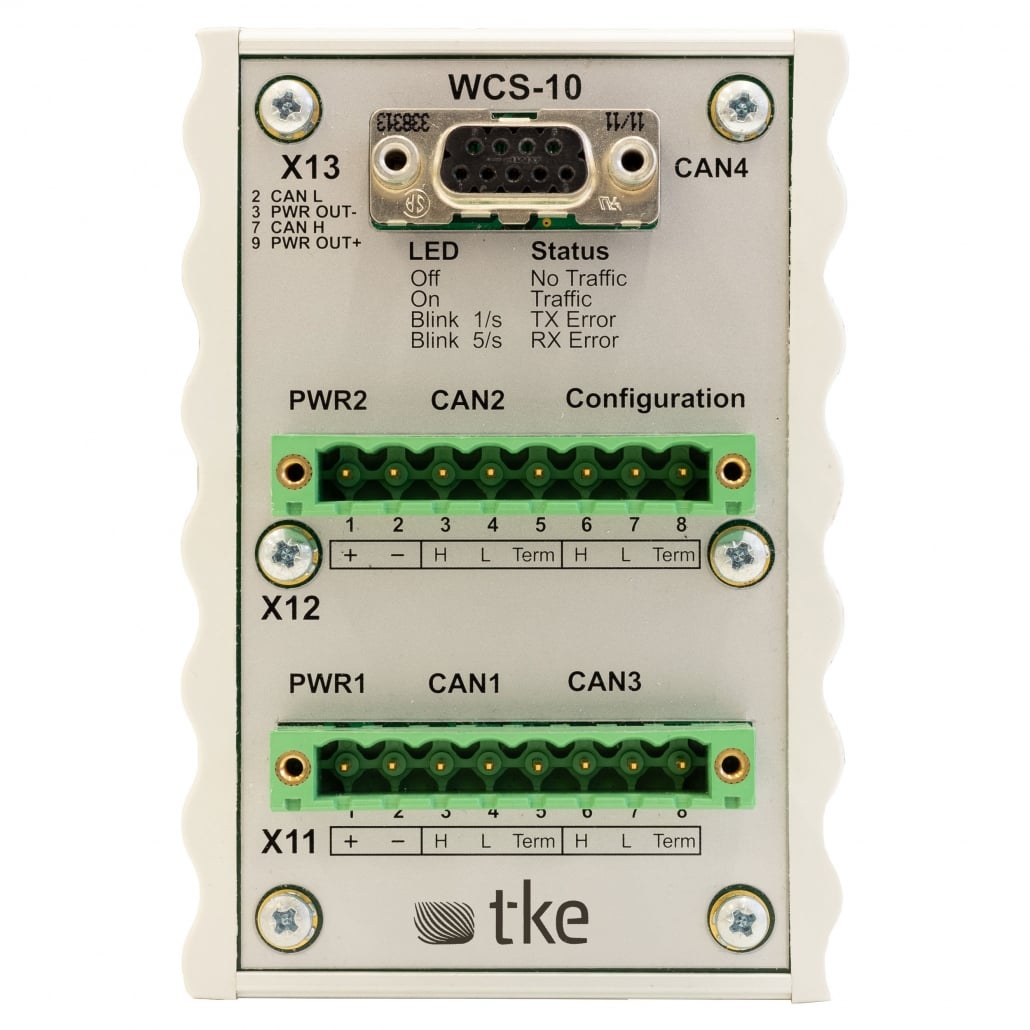
Before implementing the WCS-10 in your system, thorough compatibility verification is essential to ensure seamless integration and optimal performance. The WCS-10 marine-certified CAN switch bridge requires specific compatibility checks related to technical specifications, existing CAN-bus architecture, and operational parameters. Understanding these requirements beforehand prevents costly implementation issues, reduces downtime, and guarantees proper functionality in marine and industrial environments where reliable communication is critical.
Understanding WCS-10 compatibility: Key requirements
WCS-10 compatibility hinges on several critical factors that must be carefully assessed before integration. At its core, the WCS-10 is designed to function as a communication bridge between CAN-bus networks, requiring proper alignment with your existing system architecture.
The primary compatibility requirements include voltage specifications, communication protocols, physical connectivity constraints, and environmental operating conditions. Each of these elements plays a vital role in determining whether the WCS-10 will integrate successfully with your current infrastructure.
Compatibility verification is not merely a technical formality but a crucial step that directly impacts system performance. Without proper assessment, issues like data transmission errors, network instability, or complete communication failure may occur. This is particularly critical in marine applications where system reliability directly affects operational safety and efficiency.
A methodical approach to compatibility checking provides the foundation for successful implementation, allowing you to identify potential challenges early and develop appropriate mitigation strategies before deployment.
What specifications should you verify before implementing WCS-10?
Before implementing the WCS-10, you must verify several key technical specifications to ensure proper compatibility with your existing systems. The power requirements should be your first checkpoint—confirm that your system can provide the 10-30V DC power supply that the WCS-10 requires for stable operation.
Communication protocol verification is equally important. The WCS-10 supports standard CAN protocols, but you need to confirm your specific CAN implementation (CAN 2.0A/B) is compatible and that the baud rates match across your network infrastructure. Mismatched communication parameters will prevent proper data exchange.
Physical installation constraints must also be considered:
- Mounting space requirements
- Cable reach and routing possibilities
- Connector compatibility
- Environmental protection needs
The marine certification of the WCS-10 indicates robust environmental specifications, but you should still verify that your operational environment falls within the device’s temperature, humidity, and vibration tolerance ranges. For marine applications, checking compliance with relevant industry standards ensures regulatory compatibility alongside technical compatibility.
Network topology considerations are also critical—the WCS-10 functions as a bridge between CAN networks, so understanding your current network structure and how the device will fit within it prevents integration challenges later.
How does WCS-10 integrate with existing CAN-bus systems?
The WCS-10 integrates with existing CAN-bus systems by functioning as a bridge that connects separate CAN networks while maintaining signal integrity and proper data routing. This network segmentation capability allows for creating logically separated CAN domains that can still communicate with each other through controlled message forwarding.
When implementing the WCS-10, you’ll need to address several integration points:
First, confirm protocol compatibility between your existing CAN-bus implementation and the WCS-10. While it supports standard CAN protocols, subtle implementation differences in message formatting or timing parameters can affect performance.
Next, consider the addressing schemes used across your networks. The WCS-10 manages message routing based on CAN IDs, so you’ll need to ensure your addressing structure works with the filtering and forwarding rules the device supports.
Termination requirements represent another critical integration factor. Each CAN segment requires proper termination for signal integrity, and adding the WCS-10 may require adjusting your termination setup to maintain the correct electrical characteristics across the network.
Bandwidth considerations also affect integration success. The WCS-10 has specific throughput capabilities, and you need to verify that your expected message volume and frequency won’t exceed these limitations, particularly during peak operational periods.
What are the common compatibility issues with WCS-10 implementation?
When implementing the WCS-10, several common compatibility issues may arise that can affect system performance. Termination problems frequently occur when CAN bus segments aren’t properly terminated after adding the WCS-10 to the network, causing signal reflections and communication errors.
Bandwidth limitations can become apparent in high-traffic scenarios. If your existing network operates near capacity, the additional routing overhead introduced by the WCS-10 might cause message delays or drops during peak activity periods. Carefully assessing your network load beforehand can help prevent these issues.
Configuration mismatches represent another common challenge, including:
- Misaligned baud rates between network segments
- Incompatible message filtering rules
- Incorrect CAN ID management
- Improper network timing parameters
Power supply instability can also cause intermittent connectivity problems that are difficult to diagnose. The WCS-10 requires stable power within its specified range, and voltage fluctuations can lead to unpredictable behavior.
Environmental compatibility issues sometimes emerge after installation, particularly in marine applications where temperature extremes, humidity, or vibration might exceed expected parameters. Despite the marine certification, each installation environment has unique characteristics that may affect performance.
Most compatibility issues can be resolved through proper pre-installation assessment, careful configuration, and systematic troubleshooting when problems do arise.
How can you test WCS-10 compatibility before full deployment?
Before full deployment, you can test WCS-10 compatibility through a phased approach that minimizes risk and verifies functionality. Begin with bench testing by connecting the WCS-10 to a simplified version of your target network in a controlled environment. This allows you to verify basic connectivity, message routing, and power stability without affecting production systems.
Follow this structured testing methodology:
- Start with standalone testing of power requirements and basic connectivity
- Create a minimal test network with representative devices from your production environment
- Gradually increase the complexity by adding more devices and message types
- Simulate peak load conditions to verify performance under stress
- Test failure scenarios to understand system behavior during communications issues
Network simulation tools can enhance your testing process by allowing you to model complex interactions before physical implementation. These tools help identify potential bottlenecks or configuration issues that might not be apparent in simpler test setups.
Consider implementing a partial deployment strategy in non-critical areas of your network first. This approach provides real-world validation while containing any potential issues to less critical operations. Document all test results methodically, as this information proves invaluable during full deployment and for any troubleshooting that may be needed later.
Testing should verify not just basic functionality but also performance under your specific operational conditions, including message latency, throughput capacity, and behavior during network disruptions.
Key takeaways: Ensuring successful WCS-10 integration
Successful WCS-10 integration relies on thorough preparation and systematic verification of compatibility factors. Proactive assessment of your existing CAN-bus infrastructure forms the foundation for a smooth implementation process, preventing costly issues and operational disruptions.
Remember these essential guidelines for optimal results:
- Verify all technical specifications before purchase, including voltage requirements, communication protocols, and environmental parameters
- Document your current network topology and addressing scheme to guide configuration decisions
- Test in phases, starting with bench testing and gradually moving toward full implementation
- Prepare fallback options in case unexpected compatibility issues arise during deployment
- Maintain comprehensive documentation of your configuration for future reference
Planning for long-term maintenance is equally important. Consider how system changes, expansions, or updates might affect WCS-10 compatibility in the future. Establishing a change management process helps maintain compatibility as your network evolves.
Implementation success ultimately depends on combining technical knowledge with methodical planning. By following these best practices and conducting thorough compatibility checks, you can achieve a reliable, high-performance integration that leverages the full capabilities of the WCS-10 marine-certified CAN switch bridge within your specific operational environment.
Interested in real-world automation solutions?
Browse our case studies to discover how we support safe and efficient operations through smart control and networking systems