
Is the TCS-10 Worth the Investment? A Full Breakdown
 MARIN
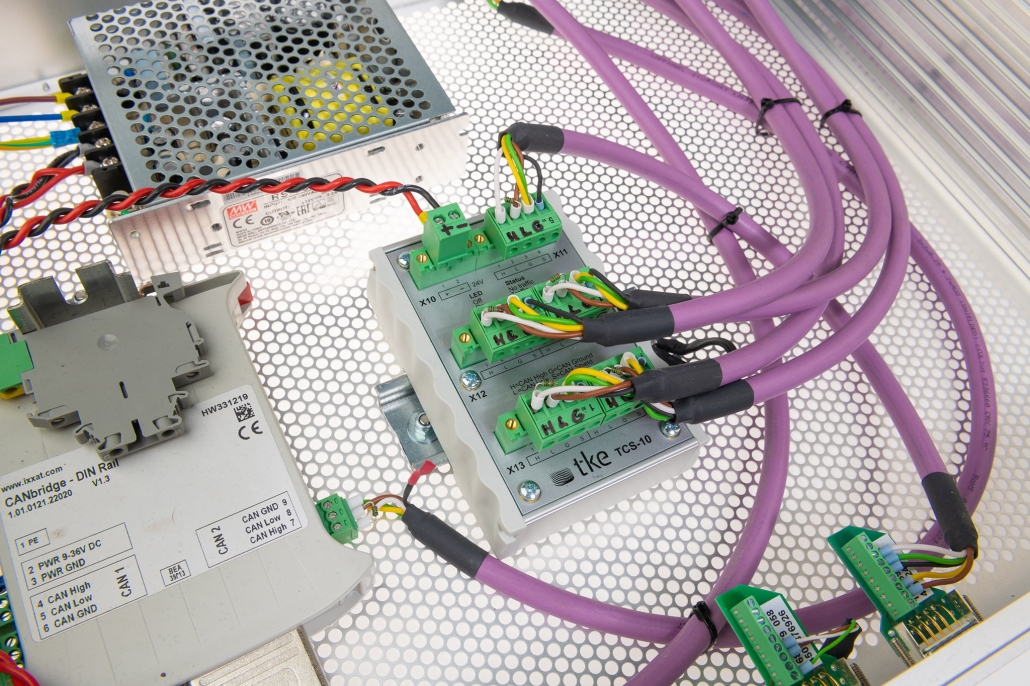
MARINThe TCS-10 CAN switch bridge represents a worthwhile investment for businesses seeking to optimize their industrial automation networks. This specialized device addresses common network congestion issues while enhancing overall system performance and reliability. For organizations utilizing CAN-bus technology in their operations, the TCS-10 offers tangible benefits in terms of improved data throughput, reduced downtime, and simplified network management. Its ability to segment network traffic and maintain signal integrity across complex systems makes it particularly valuable for growing industrial environments that require robust communication infrastructure.
Understanding the TCS-10: Key features and capabilities
The TCS-10 is a sophisticated CAN switch bridge designed to optimize industrial network communications by intelligently managing CAN-bus traffic. At its core, this device functions as a network segmentation tool, allowing users to divide a single CAN network into multiple subnets while maintaining seamless communication between all connected devices.
The primary technical specifications include support for standard CAN protocols, configurable filtering capabilities, and robust signal regeneration features. With four independent CAN channels, the TCS-10 can handle complex network topologies while maintaining high signal integrity across all segments.
Its most common applications include:
- Industrial automation systems where multiple control units need to communicate efficiently
- Manufacturing environments requiring reliable real-time data exchange
- Complex machinery installations where network traffic management is critical
- Systems experiencing communication bottlenecks due to excessive message traffic
The TCS-10’s architecture allows it to prevent network congestion by intelligently directing messages only to relevant segments, significantly reducing unnecessary traffic across the entire system.
What makes the TCS-10 different from other CAN-bus solutions?
The TCS-10 stands apart from standard CAN-bus solutions through its specialized message filtering and network segmentation capabilities. While traditional CAN repeaters simply amplify and forward all messages, the TCS-10 intelligently routes traffic based on message IDs and content, dramatically reducing network congestion.
Compared to basic CAN interfaces, the TCS-10 offers several distinctive advantages:
- Selective message filtering that allows only relevant data to pass between segments
- Enhanced signal quality through regeneration at each port, enabling longer total network distances
- Configurability that allows custom routing rules for specific application needs
- Built-in diagnostic capabilities that help identify and resolve network issues quickly
This combination of features results in superior network performance compared to basic repeaters or standard CAN interfaces. The TCS-10’s ability to create logical network segments while maintaining seamless communication between them provides a level of flexibility and efficiency that conventional solutions simply cannot match.
Where traditional CAN networks often suffer from message collisions and bandwidth limitations as they grow, the TCS-10 enables systematic expansion without degrading performance or reliability.
How does the TCS-10 improve network performance?
The TCS-10 delivers significant network performance improvements through intelligent traffic management and signal optimization. By segmenting a CAN network into logical subnets, it reduces the total message load on any single segment, effectively eliminating one of the primary causes of CAN network congestion.
This segmentation provides several concrete technical benefits:
- Reduced bus load on individual segments, allowing for higher priority messages to be delivered without delays
- Improved signal quality through regeneration at each segment boundary, preventing signal degradation over distance
- Enhanced throughput as multiple segments can communicate simultaneously without interference
- Lower error rates due to reduced message collisions and more stable communication
The TCS-10 also contributes to improved system reliability by isolating network faults. If one segment experiences electrical issues or excessive errors, the TCS-10 prevents these problems from affecting the entire network, allowing the rest of the system to continue operating normally.
For systems approaching their bandwidth limits, implementing the TCS-10 can often extend the useful life of existing infrastructure by optimizing how the available bandwidth is utilized across different parts of the network.
What is the typical return on investment for a TCS-10?
The return on investment for a TCS-10 typically manifests through reduced operational disruptions, lower maintenance costs, and extended network lifespan. While the initial hardware investment may seem significant, the long-term operational benefits often justify the expenditure within months of implementation.
Key financial benefits include:
- Reduced downtime through more reliable network communication and faster fault isolation
- Lower maintenance costs as network issues become easier to diagnose and resolve
- Extended lifespan of existing CAN networks by optimizing bandwidth utilization
- Improved operational efficiency through more responsive control systems
For organizations experiencing network-related production issues, the TCS-10 often pays for itself through just a few prevented downtime incidents. Additionally, the ability to expand network capabilities without a complete system redesign provides substantial cost savings compared to alternative solutions.
The value proposition is particularly strong for operations where network reliability directly impacts production efficiency or where system downtime carries significant financial consequences. In these environments, the investment in a TCS-10 represents a strategic decision to protect operations from communication-related disruptions.
How easy is the TCS-10 to implement in existing systems?
The TCS-10 is designed for straightforward integration into existing CAN-bus networks with minimal disruption to ongoing operations. Installation typically requires no specialized programming knowledge, making it accessible for technical teams with basic network understanding.
The implementation process generally involves:
- Physical installation of the device at strategic network junction points
- Basic configuration of message filtering parameters using the intuitive interface
- Connection of CAN bus segments to the appropriate ports
- Network testing to verify proper message routing and system performance
Most implementations can be completed within a few hours, often during scheduled maintenance windows to minimize operational impact. The TCS-10 is compatible with all standard CAN protocols and can work alongside existing network components without requiring their replacement.
For organizations with limited technical resources, comprehensive documentation and support services are available to guide the installation and configuration process. This ensures that even teams with modest CAN network experience can successfully implement the solution and realize its benefits quickly.
Key takeaways: Is the TCS-10 worth your investment?
The TCS-10 represents a worthwhile investment for organizations facing specific challenges with their industrial CAN networks. Its value proposition is strongest for systems experiencing bandwidth limitations, reliability issues, or those requiring more sophisticated network management capabilities.
The investment makes particular sense in these scenarios:
- Networks approaching their message capacity limits where congestion is affecting performance
- Systems requiring isolation between different functional areas while maintaining communication
- Applications where network reliability is critical to operational success
- Environments planning for future expansion of their CAN infrastructure
The primary benefits – reduced network congestion, improved signal quality, enhanced system reliability, and simplified troubleshooting – directly address the most common pain points in industrial CAN networks. For organizations experiencing these challenges, the TCS-10 offers a targeted solution that can deliver significant operational improvements.
When evaluating this investment, consider both the immediate performance improvements and the long-term operational benefits, including reduced maintenance costs, decreased downtime, and extended network lifespan. For many industrial applications, these combined advantages make the TCS-10 a sound investment that delivers value well beyond its initial cost.
Interested in real-world automation solutions?
Browse our case studies to discover how we support safe and efficient operations through smart control and networking systems