
How does Leaf v3 integrate with CANopen systems?
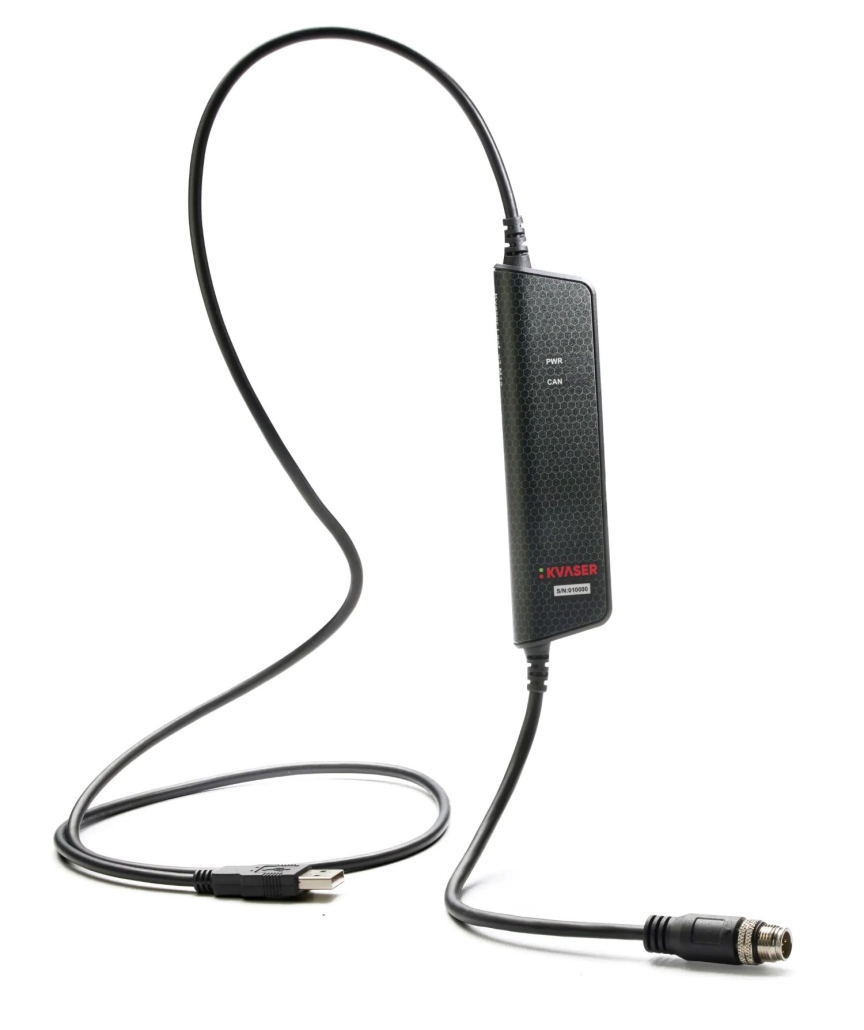
The Kvaser Leaf v3 integrates with CANopen systems through its advanced protocol support and hardware capabilities, providing a seamless interface between CAN bus networks and CANopen applications. This integration enables reliable communication, diagnostics, and monitoring of industrial and automotive CANopen networks. The Leaf v3’s compatibility with CANopen protocol standards, combined with features like galvanic isolation and high-speed data transfer, makes it an ideal tool for engineers working with complex industrial fieldbus solutions and CANopen-based control systems.
Understanding Kvaser Leaf v3 and CANopen systems
The Kvaser Leaf v3 is a professional-grade CAN interface device that bridges the gap between computers and CAN bus networks, including those using the CANopen protocol. CANopen is a higher-layer communication protocol based on CAN that has become a standardised protocol in automation and industrial control systems, particularly in Europe.
CANopen’s significance comes from its ability to provide a standardised framework for networked industrial systems. It defines communication objects, protocols, and device profiles that simplify the integration of multi-vendor systems. The Leaf v3 interface serves as a critical gateway to these networks, allowing engineers to access, analyse, and interact with CANopen systems.
In industrial applications, CANopen is commonly used for machinery control, building automation, and medical equipment. In automotive contexts, it’s valuable for diagnostics and subsystem integration. The Leaf v3’s ability to interface with these systems makes it an essential tool for development, testing, and maintenance across these sectors.
What are the key technical features of Kvaser Leaf v3?
The Kvaser Leaf v3 offers comprehensive technical capabilities designed specifically for modern CAN bus applications. It supports both Classical CAN and CAN FD (Flexible Data-rate) protocols, enabling data transfers up to 8 Mbps in FD mode—a significant improvement over previous generations. The device also maintains compatibility with single-wire CAN implementations, making it versatile for various industrial and automotive applications.
Key specifications include:
- USB 2.0 connectivity with high-speed operation
- Galvanic isolation of up to 500V
- Support for both Linux and Windows operating systems
- Silent mode for passive bus monitoring
- Rugged, compact housing suitable for field use
Compared to previous Leaf models, the Leaf v3 delivers enhanced performance through improved latency, higher message throughput, and better error handling capabilities. Its expanded temperature range also makes it suitable for deployment in harsh industrial environments where earlier models might struggle.
How does Leaf v3 technically integrate with CANopen systems?
The Leaf v3 integrates with CANopen systems by functioning as a hardware interface that connects to the physical CAN bus while providing software drivers that can interpret and process CANopen protocol messages. This integration occurs at both the hardware and software levels, enabling seamless communication between a computer and the CANopen network.
At the hardware level, the Leaf v3 connects to the CANopen network’s physical layer through standard CAN connectors. It handles the electrical signaling and provides the necessary galvanic isolation for protection. The device manages the bit timing and synchronisation required for proper communication on the CAN bus.
At the software level, the Leaf v3 works with CANopen-compatible software to process the protocol-specific message formats, including:
- Process Data Objects (PDOs) for real-time data exchange
- Service Data Objects (SDOs) for parameter access and configuration
- Network Management (NMT) messages for controlling device states
- Emergency (EMCY) messages for error reporting
The Leaf v3 translates these protocol-specific messages into a format usable by application software, allowing engineers to monitor and control CANopen networks efficiently. This integration is particularly valuable for those implementing or troubleshooting complex CANopen systems in industrial environments.
What role does galvanic isolation play in Leaf v3’s CANopen applications?
Galvanic isolation in the Kvaser Leaf v3 serves as a critical safety feature that prevents electrical current from flowing between the CANopen network and the connected computer. This isolation is essential in industrial environments where voltage differences and ground loops can damage equipment and corrupt data transmission.
The 500V isolation barrier in the Leaf v3 provides several important benefits for CANopen applications:
- Protection against common-mode voltage and ground potential differences in large industrial installations
- Reduction of electromagnetic interference (EMI) that could otherwise disrupt sensitive CANopen communication
- Prevention of ground loops that may cause erratic network behaviour or damage to connected devices
- Enhanced reliability in electrically noisy environments typical of factory floors and industrial settings
For CANopen systems that often span large physical areas in industrial settings, this isolation ensures reliable data transmission even when different parts of the network experience varying electrical conditions. Engineers working with CANopen applications particularly value this feature when diagnosing issues in operational industrial systems where electrical noise is prevalent.
How can Leaf v3 be used for CANopen diagnostics and monitoring?
The Kvaser Leaf v3 excels as a diagnostic tool for CANopen networks by providing real-time visibility into bus traffic and protocol-specific communication. Engineers can use the Leaf v3 to capture and analyse all CANopen messages, including standard and emergency frames, making it invaluable for troubleshooting complex systems.
For CANopen diagnostics, the Leaf v3 enables:
- Real-time monitoring of network traffic and node states
- Detection of communication errors and protocol violations
- Analysis of timing issues that may affect system performance
- Verification of proper implementation of CANopen device profiles
The Leaf v3 works with specialised software tools that can decode CANopen-specific protocols, displaying the data in human-readable format rather than raw CAN frames. This capability allows engineers to quickly identify issues with specific nodes, diagnose configuration problems, and verify proper network operation.
For ongoing system monitoring, the Leaf v3 can be used to log CANopen traffic over extended periods, helping identify intermittent issues that might otherwise be difficult to capture. We encourage you to explore our case study section to see how this capability has been applied in real-world scenarios.
Key takeaways: Maximising Leaf v3’s potential with CANopen systems
When implementing Kvaser Leaf v3 with CANopen systems, understanding both the hardware capabilities and protocol specifics is essential for optimal results. The Leaf v3’s support for both classical CAN and CAN FD protocols makes it a versatile interface suitable for both legacy and modern CANopen implementations.
For the most reliable performance:
- Utilise the galvanic isolation feature, particularly in industrial environments with electrical noise
- Take advantage of the Leaf v3’s high data rates when working with CANopen FD networks
- Implement proper termination on the CAN bus to ensure signal integrity
- Use compatible software tools that can decode CANopen protocol specifics
The combination of the Leaf v3’s hardware capabilities and CANopen’s standardised communication framework provides engineers with powerful tools for developing, testing, and maintaining industrial automation systems. By leveraging these capabilities together, developers can create more robust, reliable, and maintainable industrial control systems.
Whether you’re implementing a new CANopen system or maintaining an existing one, the Kvaser Leaf v3 offers the technical features and reliability needed to ensure successful integration and operation in demanding industrial and automotive applications.