
What connectors are available on the U100 models?
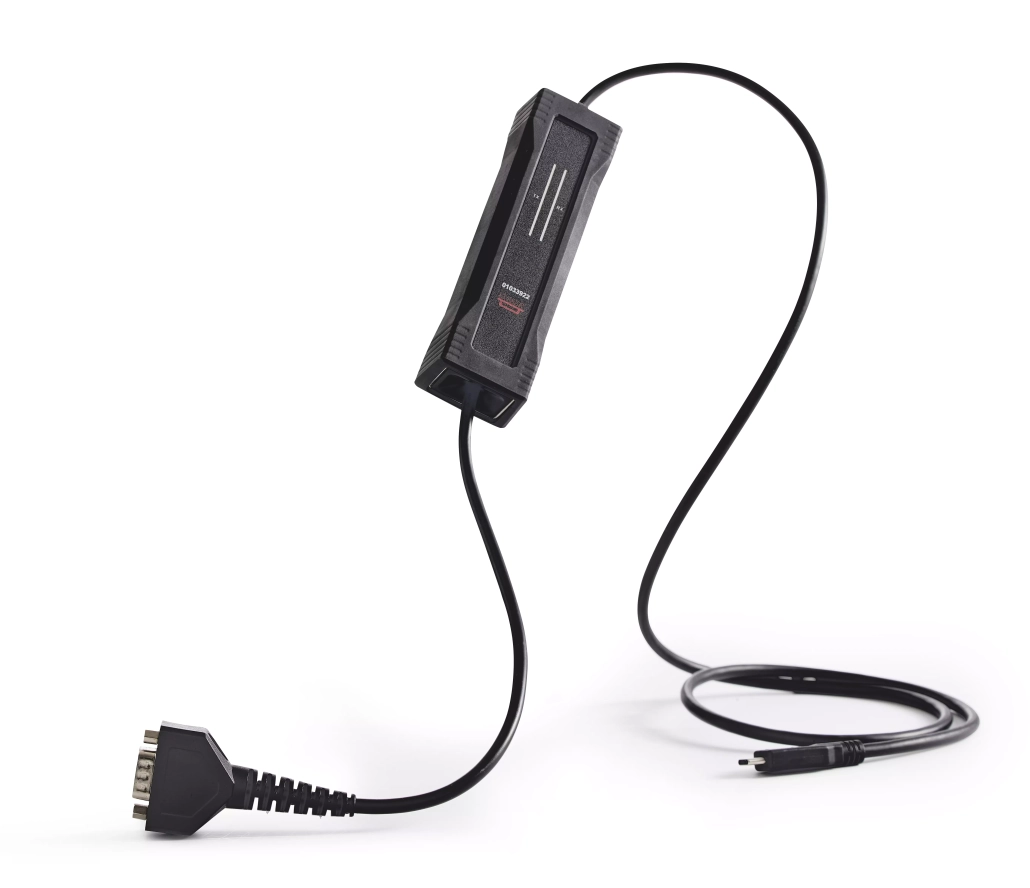
The U100 series offers various connector options to suit different application environments and requirements. These CAN-bus interfaces feature standardized connector types across the product family, with specific variations between models. The standard U100 utilizes a standard 9-pin D-SUB connector, while the rugged U100P and U100-C variants feature specialized connectors designed for harsh environments. All connector types support both CAN FD and classical CAN protocols, ensuring compatibility with a wide range of industrial applications while maintaining consistent performance standards across the entire product line.
What are the Kvaser U100 models and their connector options?
The Kvaser U100 product family consists of several models including the standard U100, the rugged U100P, the U100P-X, and the U100-C. Each model features specific connector options designed for different operating environments and application requirements.
The standard U100 utilizes a traditional 9-pin D-SUB connector, which is the most common connector type in CAN-bus applications. This provides straightforward compatibility with standard CAN networks and equipment. The U100P (Professional) model upgrades to a more robust M12 connector system, offering enhanced resistance to vibration and environmental factors like dust and moisture. The U100P-X extends these capabilities with additional rugged features, while maintaining the same connector framework. The U100-C model introduces a specialized connector designed for particularly challenging industrial environments.
All U100 variants maintain full compatibility with both CAN FD and classical CAN protocols, offering transfer rates up to 8 Mbit/s. This connector diversity allows users to select the appropriate interface based on their specific application needs, whether in laboratory settings, automotive testing, or harsh industrial environments. For detailed implementation examples, we encourage you to explore our case study section.
What connector types are used on the standard U100 model?
The standard U100 model features a conventional 9-pin D-SUB (DE-9) connector, which is the industry standard for CAN-bus interfaces. This connector follows the CiA DS-102 specification with a standardized pinout configuration that ensures compatibility with most CAN-bus systems and devices.
The pinout configuration includes dedicated pins for CAN High (typically pin 7), CAN Low (typically pin 2), and ground (pin 3), along with additional pins for optional features such as power supply and CAN shield connections. This standardized arrangement makes the U100 immediately compatible with existing CAN networks without requiring special adapters or custom cabling.
Physically, the D-SUB connector offers a secure connection with screw terminals that prevent accidental disconnection during operation. This connector type balances accessibility with reliability, making it ideal for laboratory environments, development setups, and standard industrial applications where extreme environmental protection isn’t required.
The standard U100 connector supports data transmission speeds up to 8 Mbit/s when operating in CAN FD mode, and up to 1 Mbit/s in classical CAN mode, ensuring it can handle both legacy systems and modern high-speed CAN FD networks with equal efficiency.

How do connectors differ between U100P and U100-C variants?
The U100P model features an M12 5-pin A-coded connector, which represents a significant upgrade in environmental protection compared to the standard D-SUB connector. This circular connector offers IP65/IP67 rating, providing resistance against dust, water jets, and temporary immersion. The M12 connector’s threaded coupling mechanism ensures vibration resistance, making it ideal for mobile applications, industrial machinery, and outdoor installations.
In contrast, the U100-C variant utilizes a specialized connector system designed for the most demanding environments. It incorporates enhanced electromagnetic interference (EMI) protection and superior sealing against extreme environmental conditions. This connector type is built to withstand intense vibration, severe temperature fluctuations, and exposure to corrosive substances, making it suitable for automotive testing, heavy machinery, and other harsh industrial settings.
Both the U100P and U100-C maintain the same CAN-bus signal specifications despite their different physical connectors. The key differences lie in their mechanical durability, environmental resistance, and application suitability. The U100P offers a good balance between ruggedness and cost-effectiveness for most industrial applications, while the U100-C provides maximum durability for the most challenging operating conditions.
These connector variations allow users to select the appropriate interface based on their specific environmental requirements without compromising on communication performance or protocol compatibility.
What power requirements are needed for U100 series connectors?
The U100 series interfaces require a stable power supply of 5-30 VDC across all connector variants. This flexible voltage range allows the devices to be powered directly from various sources, including vehicle batteries, industrial control systems, or standard laboratory power supplies without requiring additional voltage regulators.
Power can be supplied either through the USB connection from the host computer or via the CAN connector itself, depending on the specific installation requirements. The typical current draw is approximately 70mA at 5V during normal operation, with slightly higher consumption during active data transmission periods.
All U100 models incorporate robust power protection features regardless of connector type. These include reverse polarity protection to prevent damage from incorrect power connections, overvoltage protection against power surges, and transient voltage suppression for enhanced reliability in electrically noisy environments.
For installations in harsh environments with unstable power conditions, such as automotive applications or industrial machinery, the U100P and U100-C variants offer additional power filtering and isolation features through their specialized connectors. This provides superior protection against ground loops, common-mode noise, and other electrical disturbances that could affect communication reliability.
How can U100 connectors be integrated with embedded systems like Raspberry Pi?
Integrating U100 devices with embedded systems like Raspberry Pi requires understanding both the physical connections and software configurations. For Raspberry Pi integration, the standard U100 with its USB connector provides the simplest approach, connecting directly to the Pi’s USB ports without additional hardware.
For CAN-bus connections, you’ll need to map the appropriate pins between the U100 connector and your embedded system. When using Raspberry Pi with the standard U100, this typically involves connecting to the Pi’s GPIO pins through a CAN controller board or HAT (Hardware Attached on Top). The U100P or U100-C variants may require adapter cables to convert from their specialized connectors to the appropriate format for your embedded system.
On the software side, Linux-based systems like Raspberry Pi require the SocketCAN driver framework along with the Kvaser Linux driver. Configuration involves loading the appropriate kernel modules and setting up the CAN interface with commands like:
- sudo ip link set can0 up type can bitrate 500000
- sudo ifconfig can0 up
For programmatic access, Python libraries such as python-can provide high-level interfaces to interact with the CAN bus. This allows embedded applications to send and receive CAN messages through straightforward API calls, abstracting away the complexity of the underlying hardware connections.
Key takeaways about Kvaser U100 connector options
The connector options across the U100 product family are designed to address various operational environments while maintaining consistent performance and compatibility. The standard D-SUB connector on the base U100 model offers universal compatibility with traditional CAN-bus systems, making it ideal for laboratory and standard industrial applications.
For more demanding environments, the M12 connector on the U100P provides enhanced protection against moisture, dust, and vibration, while the specialized connector system on the U100-C delivers maximum durability for extreme conditions. All connector types support both CAN FD and classical CAN protocols, ensuring future-proof performance.
When selecting the appropriate U100 model, consider your specific environmental requirements, installation constraints, and integration needs. The standard U100 offers the most straightforward connectivity for general applications, while the ruggedized variants provide progressively higher levels of protection for challenging environments.
Regardless of connector type, all U100 models share common software interfaces, driver support, and configuration methods, simplifying migration between models if application requirements change. This connector diversity, combined with consistent performance specifications, makes the U100 series a versatile solution for a wide range of CAN-bus applications from development and testing to permanent industrial installations.