
What are the power supply requirements for Kvaser U100?
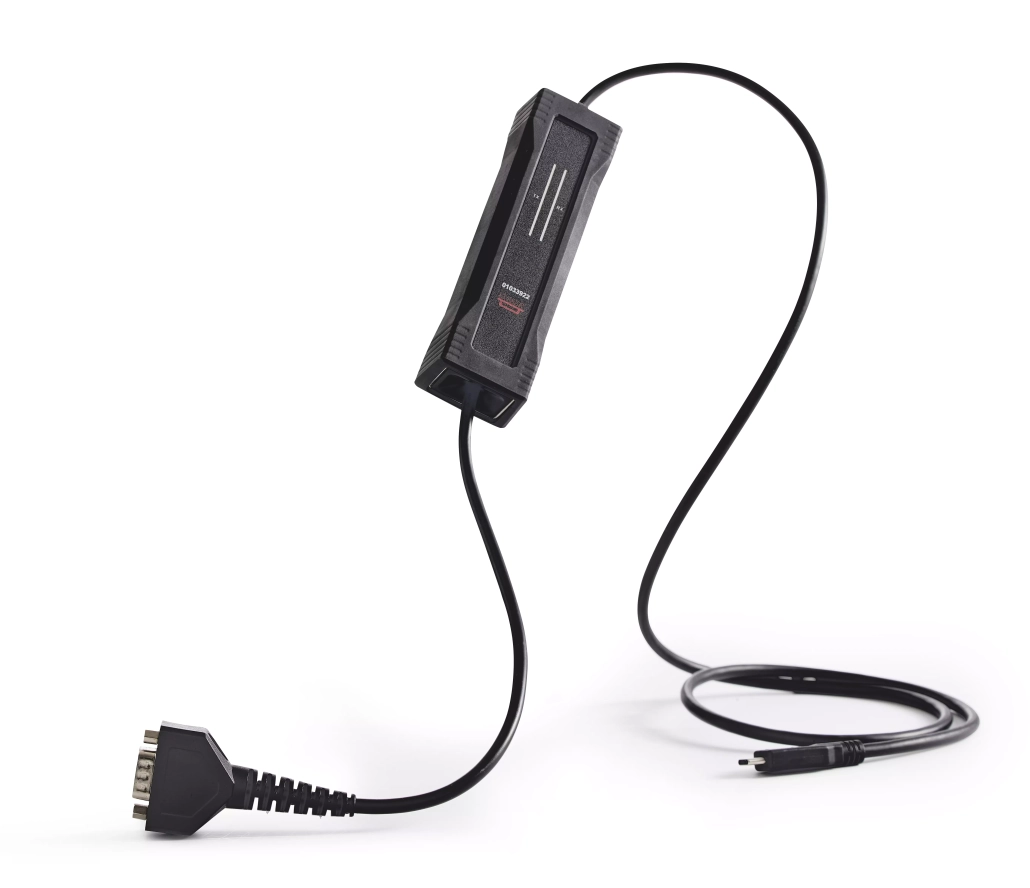
The Kvaser U100 operates primarily through USB power with 5V DC supplied via the USB connection. This compact, industrial-grade CAN bus interface requires minimal power, typically drawing between 100-250 mA depending on bus load and operating conditions. The standard U100 model relies solely on USB power, while the U100P variant features galvanic isolation that may affect power consumption slightly. Both support USB 2.0 high-speed standards and are designed to maintain stable performance even in environments with fluctuating power conditions. Additional power specifications vary between models within the product family.
Understanding Kvaser U100 product line power requirements
The Kvaser U100 product line encompasses a series of industrial-grade CAN bus interfaces designed for reliable performance in various environments. These compact USB interfaces serve as essential communication tools in automotive diagnostics, industrial automation, and embedded system development.
The product family includes several variants: the standard U100, the U100P with galvanic isolation, and the U100P-X with extended features. Each model shares core power requirements while offering specific power-related capabilities to suit different application needs.
All U100 variants are USB-powered devices, drawing their operational power directly from the host computer’s USB port. This eliminates the need for external power supplies in most standard applications, making them convenient for both laboratory and field use. The power specifications across the product line are carefully engineered to ensure reliable CAN bus communication while maintaining compatibility with standard USB power delivery specifications.
What are the basic power supply specifications for Kvaser U100?
The standard Kvaser U100 operates exclusively on USB power with no need for external power supplies. It requires a 5V DC supply provided through the USB connection, consuming approximately 100-250 mA during normal operation, with power draw varying based on bus load and activity level.
The U100 is compatible with USB 2.0 high-speed standards, which provide up to 500 mA at 5V from standard USB ports. This specification is comfortably within the power budget of most modern computers and laptops, ensuring reliable operation without overtaxing the host system’s power resources.
Power delivery through the USB connection is managed by internal circuitry that regulates voltage and protects against common power anomalies. The device incorporates power filtering to minimize the effects of electrical noise that might otherwise disrupt CAN communications. This built-in protection helps maintain signal integrity even when connected to host systems with less-than-ideal power characteristics.
Unlike some industrial interfaces, the standard U100 does not support external power inputs, as it’s designed to operate efficiently within the power envelope provided by USB connections. This design choice contributes to its compact form factor and simplifies deployment in most applications.
How does power supply differ between U100, U100P, and U100-C variants?
The primary power supply difference between these variants lies in their isolation characteristics and resulting power consumption patterns. The standard U100 draws power directly from the USB connection with no galvanic isolation, making it the most power-efficient option at approximately 100-250 mA typical consumption.
The U100P features galvanic isolation between the USB side and the CAN bus side, requiring slightly more power to maintain this isolation barrier. This isolation protects both the host computer and the CAN network from ground loops and potential damage from voltage differences, typically increasing power consumption by 10-15% compared to the standard model.
The U100-C variant maintains similar power requirements to the standard U100 but features a different connector type. Its power specifications remain aligned with the base model, drawing approximately 100-250 mA through the USB connection.
All variants operate from 5V DC supplied by the USB port, but the isolated models incorporate DC-DC converters to maintain separation between power domains. This isolation feature is particularly valuable in industrial environments where electrical noise or ground potential differences might otherwise compromise system integrity.
What power considerations exist for harsh environment deployments?
When deploying Kvaser U100 devices in harsh environments, power stability becomes a critical consideration. These interfaces incorporate transient protection on power lines to guard against voltage spikes and electromagnetic interference that are common in industrial settings.
In environments with heavy electrical noise, such as manufacturing floors or automotive test cells, the U100P with galvanic isolation offers superior protection against ground loops and common-mode noise. This isolation creates a barrier that prevents electrical disturbances from propagating between the CAN network and the host computer system.
Temperature variations can also affect power characteristics. The U100 product line is designed to operate reliably across an extended temperature range, with internal power regulation that maintains stable performance despite ambient temperature fluctuations. This thermal stability ensures consistent communication even in non-climate-controlled environments.
For deployments in vehicles or machinery with unstable power sources, adding USB isolators or powered USB hubs can provide additional protection against power anomalies. These supplementary components can help buffer the U100 devices from brownouts, surges, or other power irregularities that might otherwise cause communication interruptions.
Users working in particularly challenging environments might want to explore our case study section for real-world examples of Kvaser interfaces performing in demanding conditions.
How can I properly power Kvaser U100 when integrated with embedded systems?
When integrating Kvaser U100 interfaces with embedded systems like Raspberry Pi, proper power planning is essential. The primary consideration is ensuring your embedded system’s USB ports can deliver sufficient current to the U100 device, typically requiring a stable 5V supply capable of providing at least 250 mA.
For Raspberry Pi integrations, connect the U100 to USB ports with adequate power delivery capability. Some embedded systems have USB ports with limited power output, which may require using powered USB hubs to ensure stable operation. This is particularly important when the embedded system itself runs on battery power or limited supply.
When using multiple USB devices alongside the U100, calculate the total power requirements to avoid overloading the embedded system’s power supply. A dedicated powered USB hub can help distribute the load and ensure each device receives adequate power without causing voltage drops that might affect reliability.
For embedded applications requiring isolation, the U100P variant offers galvanic isolation that protects both the embedded system and the CAN network. This isolation is particularly valuable when the CAN network connects to devices with different power systems or ground references than the embedded controller.
Always monitor the initial setup for signs of power-related issues such as connection instability or communication errors, which might indicate insufficient power delivery to the interface.
Key takeaways about Kvaser U100 power requirements
The Kvaser U100 product line operates primarily on USB power, requiring a standard 5V DC supply with current consumption between 100-250 mA depending on the specific model and operational conditions. This power efficiency makes these interfaces suitable for a wide range of applications without needing external power sources.
Isolation features in the U100P variant provide enhanced protection against electrical disturbances at the cost of slightly increased power consumption. This trade-off is worthwhile in industrial environments or any application where electrical isolation between systems is beneficial.
All U100 variants incorporate protection against common power anomalies, helping maintain reliable operation even in challenging electrical environments. These protective features contribute to the interfaces’ reputation for robustness in industrial applications.
When integrating with embedded systems, ensuring adequate power delivery through USB connections is essential for stable operation. For complex setups or harsh environments, additional power considerations like powered USB hubs or isolators may be necessary.
By understanding these power requirements and considerations, users can select the appropriate U100 variant for their specific application needs and ensure reliable performance across diverse operating conditions.