
Is there a U100 variant for high-speed automotive applications?
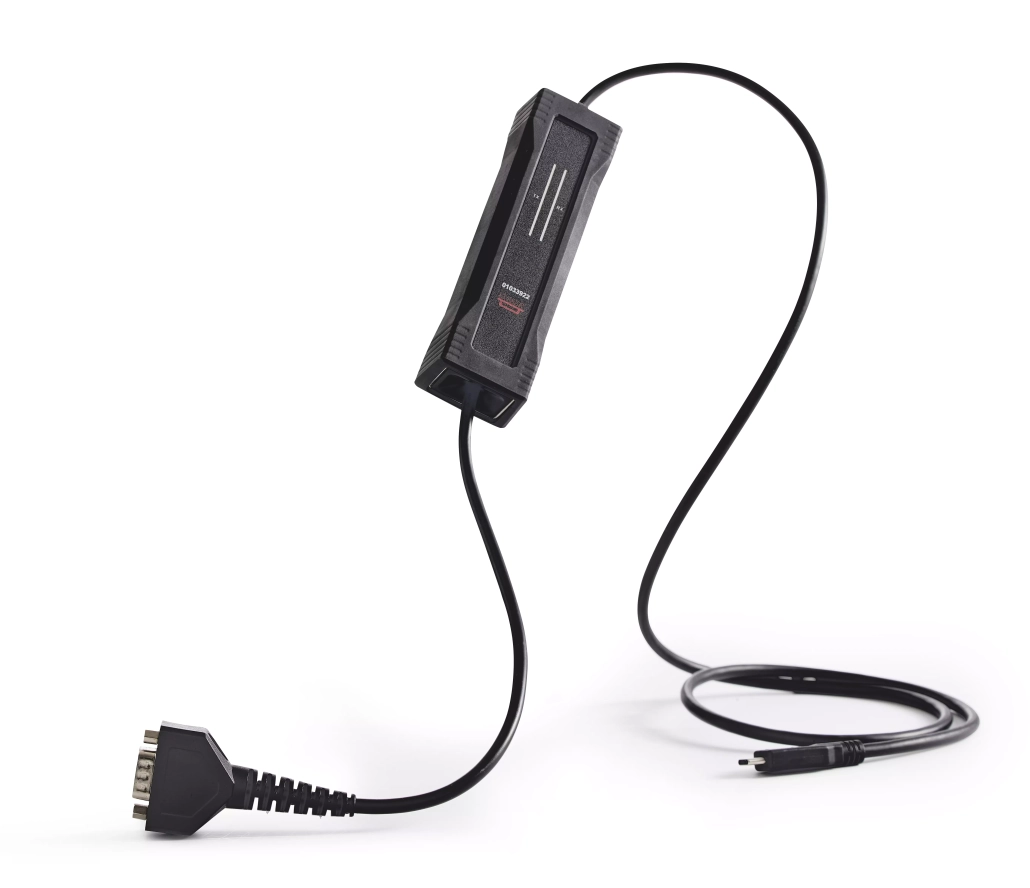
Yes, the Kvaser U100 product family includes several variants specifically designed for high-speed automotive applications. The U100, U100P, and U100-C models all support both CAN FD and classical CAN protocols with data rates up to 8 Mbit/s. These rugged interfaces are engineered to withstand the harsh conditions of automotive environments, featuring robust electromagnetic protection, wide operating temperature ranges, and industrial-grade connectors that make them ideal for in-vehicle testing and development.
Is there a U100 variant for high-speed automotive applications?
The Kvaser U100 product family is specifically engineered for high-speed automotive applications, with all variants supporting the demanding requirements of modern vehicle development and testing. The standard U100, the enhanced U100P, and the compact U100-C models all offer full CAN FD compatibility alongside classical CAN protocol support, making them versatile tools for automotive engineers.
Each variant in the U100 series delivers consistent high-speed performance with data rates reaching up to 8 Mbit/s, providing the bandwidth necessary for today’s complex automotive systems. This capability is particularly crucial when working with advanced driver assistance systems (ADAS), powertrain diagnostics, and battery management systems in electric vehicles.
The U100 family’s architecture is built around reliable, high-performance controllers that ensure accurate timing and minimal latency – critical factors when monitoring real-time vehicle data. Their professional-grade design ensures they can handle the processing demands of continuous high-speed CAN traffic without performance degradation, even during extended testing sessions.
What makes the U100 series suitable for harsh automotive environments?
The U100 series interfaces are designed with exceptional durability features that make them particularly suitable for challenging automotive environments. These interfaces offer impressive protection against environmental factors with an IP rating that shields against dust and moisture intrusion, crucial for both laboratory testing and in-vehicle applications where exposure to various elements is common.
Operating temperature ranges are another standout feature of the U100 family. These interfaces can function reliably in extreme conditions, from freezing cold to intense heat (-40°C to +85°C for most models), covering the full spectrum of automotive testing scenarios from cold-start validation to hot climate endurance testing.
Mechanical resilience is built into every U100 device, with robust construction that withstands significant vibration and shock loads – common challenges in moving vehicles. This shock resistance ensures data integrity even when mounted directly in test vehicles navigating rough terrain or undergoing aggressive driving manoeuvres.
Perhaps most importantly for automotive applications, the U100 series features comprehensive electromagnetic protection. This shielding is vital in vehicle environments saturated with electromagnetic interference from numerous electronic systems. The interfaces maintain signal integrity even when positioned near high-current components like electric motors or power inverters, ensuring reliable communication throughout testing procedures.

How do the different U100 variants compare for automotive testing?
The different U100 variants offer distinct advantages for specific automotive testing scenarios, with each model optimised for particular use cases. The base U100 model provides excellent general-purpose functionality with a standard D-SUB9 connector, making it highly compatible with existing automotive test equipment and easily integrated into established test benches.
The U100P model elevates the offering with additional power options, including the ability to draw power directly from the CAN bus or an external power supply. This flexibility is particularly valuable for field testing where power availability may be limited or inconsistent. Its reinforced connector system also provides superior durability for frequent reconnections in test environments.
For space-constrained applications, the U100-C variant offers a compact form factor without compromising performance. Its smaller size makes it ideal for integration into tight dashboard spaces or crowded engine compartments during on-road testing, where physical installation space is at a premium.
All three variants deliver identical performance capabilities under both CAN FD and classical CAN protocols, with consistent data rates and latency characteristics. This performance uniformity allows engineers to select the appropriate physical format without worrying about capability differences, simplifying the equipment selection process for diverse testing requirements.
| Feature | U100 | U100P | U100-C |
|---|---|---|---|
| Connector Type | Standard D-SUB9 | Reinforced D-SUB9 | Compact form factor |
| Power Options | USB-powered | USB/CAN bus/External | USB-powered |
| Ideal Application | General testing | Field/variable power testing | Space-constrained testing |
Can U100 interfaces integrate with embedded systems like Raspberry Pi?
Yes, U100 interfaces offer excellent integration capabilities with embedded systems like Raspberry Pi, making them ideal companions for automotive development projects using compact computing platforms. The interfaces feature comprehensive driver support across multiple operating systems, including Linux distributions commonly used on Raspberry Pi and similar embedded systems.
The software integration is facilitated through well-documented APIs that provide developers with straightforward access to CAN bus functionality. These APIs support both low-level direct communication and higher-level abstracted operations, giving developers flexibility in how they implement CAN communication in their applications.
For Raspberry Pi specifically, the U100 family’s USB connectivity provides plug-and-play functionality that simplifies hardware integration. This ease of connection, combined with the low power requirements of the interfaces, makes them particularly suitable for portable or battery-powered automotive testing setups using embedded systems.
Implementation examples in automotive contexts include developing prototype vehicle diagnostic tools, creating custom data loggers for specific vehicle subsystems, and building test automation frameworks that can be deployed directly in test vehicles. The combination of a Raspberry Pi and U100 interface creates a powerful yet compact platform for sophisticated automotive development projects without requiring extensive hardware resources.
What are the key takeaways about U100 variants for automotive applications?
The Kvaser U100 product family stands out as a versatile and robust solution for high-speed automotive applications, with each variant offering specific advantages while maintaining core performance capabilities. All models deliver reliable CAN FD support with data rates up to 8 Mbit/s, ensuring they can handle the most demanding automotive communication requirements.
The differentiating features between models primarily revolve around physical form factors and connectivity options. The standard U100 offers excellent general-purpose functionality, the U100P provides enhanced power flexibility for field testing, and the U100-C delivers the same performance in a more compact package for space-constrained installations.
Rugged design characteristics are consistent across the family, with all variants featuring robust environmental protection, wide operating temperature ranges, and strong electromagnetic immunity. These qualities ensure reliable operation in the challenging conditions typical of automotive testing environments, from laboratory benches to in-vehicle deployments.
The software ecosystem supporting these interfaces provides seamless integration with both standard computing platforms and embedded systems like Raspberry Pi, opening up diverse implementation possibilities for automotive development teams with different resource requirements and project scales.
For practical implementation insights and real-world examples of how these interfaces perform in automotive applications, we invite you to explore our detailed case study collection, which demonstrates how various organisations have leveraged these tools to solve complex automotive development challenges.