
How does the U100 compare to other Kvaser interfaces?
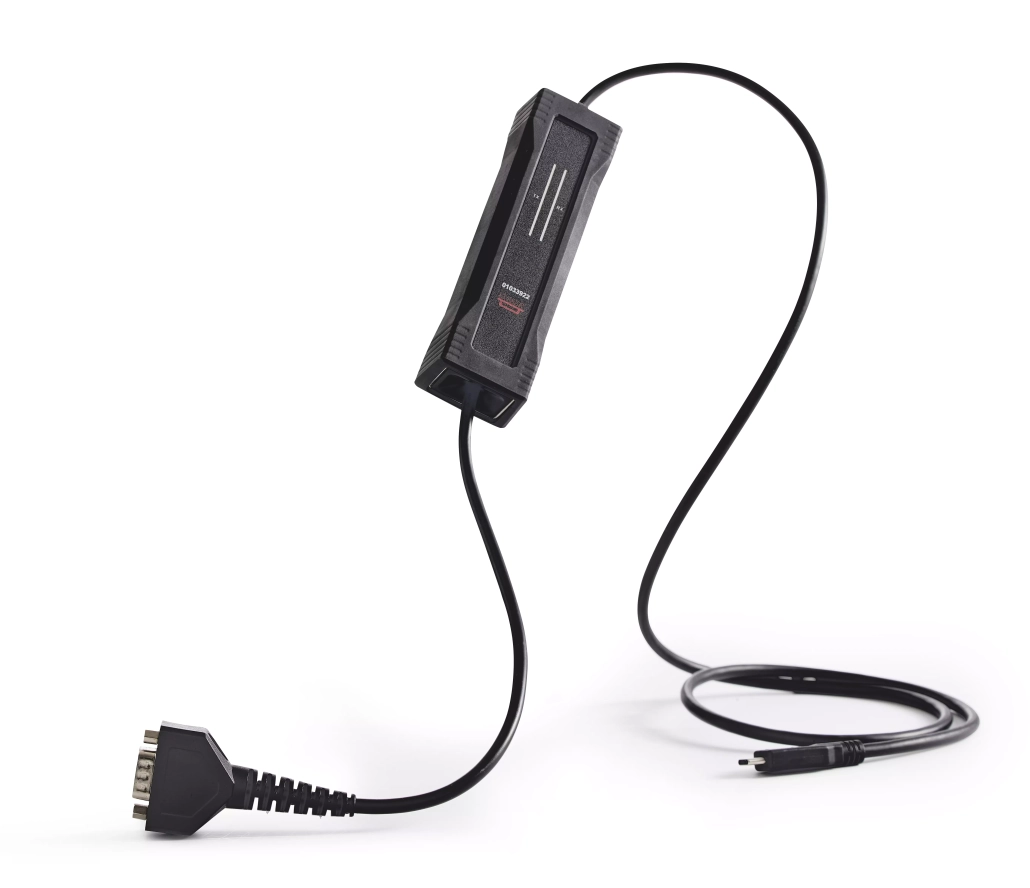
The U100 series stands out in the Kvaser interface lineup due to its exceptional ruggedness and versatility. Compared to other Kvaser interfaces, the U100 family offers superior electromagnetic protection, extended temperature ranges, and industrial-grade durability while maintaining high performance for both classical CAN and CAN FD protocols. The series includes specialized variants—U100, U100P, and U100-C—each optimised for different connection requirements and environmental conditions, making them ideal for demanding applications from automotive testing to industrial automation.
What makes the Kvaser U100 series unique in the CAN interface market?
The Kvaser U100 series distinguishes itself through its exceptional ruggedness and industrial-grade design specifically engineered for challenging environments. Unlike standard interfaces, the U100 family features reinforced protection against electromagnetic interference (EMI), electrostatic discharge (ESD), and voltage transients—critical safeguards for industrial and automotive applications.
These interfaces offer an impressive operating temperature range from -40°C to 85°C, significantly broader than most consumer-grade alternatives. This thermal resilience makes them suitable for deployment in everything from freezing outdoor installations to hot engine compartments.
The U100 product line includes multiple variants with different connector options to accommodate various integration scenarios:
- Standard U100 with USB Type-A connector
- U100P with 9-pin D-SUB connector
- U100-C with versatile USB Type-C connection
All variants support both classical CAN and the newer CAN FD protocol, providing backward compatibility while enabling access to higher bandwidth capabilities. This future-proofing aspect ensures longevity in evolving technical ecosystems, making the U100 series particularly valuable for long-term industrial deployments.
How does the U100 perform compared to other Kvaser interfaces?
The U100 series delivers comparable or superior performance metrics when matched against other Kvaser interfaces while adding significant environmental hardening. For CAN FD applications, the U100 family supports data rates up to 8 Mbps, matching the throughput capabilities of many higher-priced Kvaser options but in a more robust package.
In terms of latency, the U100 interfaces achieve exceptional response times even in electrically noisy environments where other interfaces might struggle with data corruption. This reliability stems from superior isolation and protection circuitry that filters out electrical noise without compromising communication speed.
While some premium Kvaser interfaces like the Memorator Pro offer additional features such as standalone logging, the U100 series prioritises consistent performance and durability at a more accessible price point. The trade-off favours reliable operation in challenging conditions over advanced features that may be unnecessary for many industrial applications.
For users seeking detailed performance comparisons in specific applications, we recommend exploring our case studies which document real-world implementation scenarios and measured results.
What are the key differences between U100, U100P, and U100-C models?
The primary differences between the three U100 variants lie in their connector types, power delivery methods, and specific use case optimisations:
- The standard U100 features a USB Type-A connector, making it compatible with most computers and embedded systems. It draws power directly through the USB connection.
- The U100P incorporates a 9-pin D-SUB connector commonly used in industrial automation. This variant can be powered either through the USB connection or externally through the D-SUB connector, offering flexibility in power-constrained environments.
- The U100-C utilises the modern USB Type-C connector, providing a more secure connection with reversible orientation. This variant is particularly well-suited for newer computing platforms and offers improved durability for repeated connections/disconnections.
All three models maintain the same core CAN FD capabilities and rugged protection features, but they differ in physical dimensions due to their connector configurations. The U100P is slightly larger to accommodate the additional D-SUB connector, while the U100-C maintains a compact form factor despite its modern connection type.
Software compatibility remains consistent across all variants, with support for Kvaser’s standard driver packages and third-party CAN development tools.
Which environments and applications are best suited for U100 interfaces?
The U100 series excels in harsh industrial environments where standard interfaces would quickly fail. These interfaces are ideally suited for manufacturing floors with high electromagnetic interference, outdoor installations exposed to temperature extremes, and mobile equipment subject to vibration and physical stress.
Specific applications where the U100 family demonstrates particular value include:
- Automotive testing and development, especially for powertrain and emissions systems
- Industrial automation and control systems in factories with electrical noise
- Agricultural equipment monitoring in dusty, vibration-prone environments
- Renewable energy systems exposed to outdoor conditions
- Mobile diagnostic equipment that requires frequent connection/disconnection
The U100P variant specifically addresses applications requiring galvanic isolation between systems, such as connecting to heavy machinery where ground potential differences could damage standard interfaces. Meanwhile, the U100-C proves valuable in test laboratory settings where modern computing equipment with USB-C ports is common.
For applications requiring multiple CAN channels or advanced data logging, other Kvaser interfaces may be more appropriate, but for single-channel applications in challenging environments, the U100 series is difficult to surpass.
How does the U100 series integrate with embedded systems like Raspberry Pi?
The U100 series interfaces integrate seamlessly with popular embedded computing platforms like Raspberry Pi through standardised drivers and straightforward USB connectivity. For Raspberry Pi integration, users can leverage the Kvaser Linux driver package which supports the entire U100 family.
Setting up a U100 interface with Raspberry Pi typically involves:
- Installing the appropriate Kvaser Linux drivers from the official repository
- Connecting the U100 device to an available USB port (using an adapter for USB-C if necessary)
- Configuring the CAN bitrate and parameters through standard SocketCAN utilities
- Implementing application code using common CAN libraries like python-can or socketcan
The compact size and low power requirements of the U100 series make them particularly well-suited for embedded applications. The U100 draws minimal power directly from the USB port, avoiding the need for external power supplies that would complicate embedded system deployments.
For industrial Raspberry Pi deployments, the U100’s extended temperature range matches or exceeds the capabilities of industrial-grade Pi variants, ensuring reliable operation even in temperature-challenged environments.
Key takeaways: Choosing the right Kvaser interface for your CAN-bus needs
When selecting the optimal Kvaser interface for your application, consider these critical factors:
- Environmental conditions: If your deployment faces electromagnetic interference, temperature extremes, or physical stress, the U100 series offers superior protection compared to standard Kvaser options.
- Connector requirements: Choose the U100 variant that matches your system’s physical connection needs—standard USB-A (U100), industrial D-SUB (U100P), or modern USB-C (U100-C).
- Protocol support: All U100 variants support both classical CAN and CAN FD, making them suitable for both legacy systems and newer high-speed applications.
- Channel count: The U100 series provides single-channel interfaces; for multi-channel requirements, consider other Kvaser product lines.
For most industrial and automotive applications requiring a single CAN channel with excellent reliability, the U100 series represents an optimal balance of performance, durability, and cost-effectiveness. The enhanced protection features ensure consistent operation in environments where consumer-grade interfaces would quickly fail.
Ultimately, the U100 family’s position in the Kvaser lineup is clear: these interfaces deliver professional-grade CAN connectivity for demanding environments without unnecessary complexity or cost. For specialised requirements beyond the U100’s capabilities, Kvaser’s extensive product range offers solutions scaled to meet virtually any CAN networking need.