
How does Influx compare to other CAN loggers?
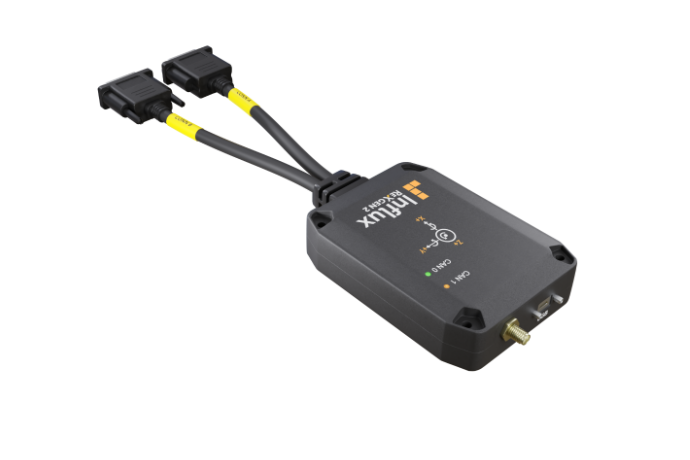
Influx CAN loggers, especially the ReXgen series, offer distinctive capabilities compared to other market options. These loggers stand out with their comprehensive support for CAN diagnostics, featuring robust memory configurations, sophisticated trigger-based logging, and versatile applications in fleet, vehicle, and system testing environments. Unlike many competitors, Influx loggers provide seamless integration with various hardware platforms including Kvaser devices, while offering enhanced data security and support for industry-standard formats. This makes them particularly suitable for professionals requiring reliable, feature-rich automotive testing tools.
Understanding Influx CAN loggers: Core features and capabilities
Influx data logging tools, with the ReXgen series at the forefront, deliver comprehensive capabilities for professional CAN bus diagnostics and monitoring. These sophisticated devices combine extensive memory options with precise trigger-based logging mechanisms to capture exactly what engineers need when troubleshooting or analyzing vehicle systems.
The ReXgen data logger offers multiple memory configurations to accommodate various project scopes, from brief diagnostic sessions to extended fleet monitoring campaigns. This flexibility allows users to select the appropriate storage capacity based on their specific requirements, ensuring efficient resource utilisation without unnecessary costs.
A particularly valuable feature is the advanced trigger-based logging capability, which enables users to define specific conditions that activate data recording. This intelligent approach conserves storage space while ensuring critical events are never missed, making it ideal for intermittent fault diagnosis.
Influx loggers excel in diverse applications, including:
- Fleet monitoring and management
- Vehicle development and validation testing
- System integration verification
- Long-term reliability assessment
- Performance optimisation
This versatility makes Influx solutions particularly valuable for automotive engineers, fleet managers, and testing specialists who require comprehensive data capture capabilities with minimal configuration complexity.
How does Influx compare to other CAN loggers in hardware compatibility?
Influx CAN loggers demonstrate exceptional hardware compatibility compared to most competing solutions, particularly through their seamless integration with Kvaser hardware and broad protocol support. This compatibility advantage significantly simplifies implementation across diverse testing environments.
While many competitive loggers limit connections to specific hardware ecosystems, Influx systems support a more extensive range of interfaces. This includes native compatibility with Kvaser’s widely-used CAN interfaces alongside support for other industry-standard hardware, providing greater flexibility when building or expanding test setups.
The protocol support extends beyond basic CAN to include:
- Standard CAN 2.0
- CAN FD (Flexible Data-rate)
- OBD-II and enhanced diagnostic protocols
- J1939 for heavy-duty vehicles
- LIN (Local Interconnect Network)
This comprehensive protocol compatibility surpasses what’s typically available from single-purpose logging tools, eliminating the need for multiple devices when working across different vehicle platforms. Reviewing a Case study can provide real-world examples of this versatility in action.
Integration flexibility represents another significant advantage, with Influx loggers offering straightforward incorporation into existing test benches, production environments, and field testing setups through standardised interfaces and well-documented APIs.
What advanced features set Influx loggers apart from competitors?
Influx loggers distinguish themselves with several advanced features that competitors typically lack, most notably their comprehensive GPS/IMU integration capabilities, specialised software functionality, and sophisticated trigger mechanisms for contextual data capture.
The GPS and Inertial Measurement Unit (IMU) support provides crucial geospatial context to logged CAN data, enabling engineers to correlate vehicle behaviour with precise location, elevation, acceleration, and orientation information. This integrated approach eliminates the complexity of synchronising separate data sources, a common challenge with competing systems that offer limited or no position tracking.
Influx’s software suite delivers advantages through:
- Intuitive visualisation tools that transform complex data into actionable insights
- Advanced filtering capabilities to isolate specific signals or conditions
- Automated report generation for streamlined documentation
- Real-time monitoring options alongside traditional logging
The trigger mechanisms represent another area where Influx outperforms competitors, offering multi-conditional triggers that can initiate logging based on combinations of parameters rather than simple thresholds. This sophisticated approach ensures targeted data capture for more efficient analysis and reduced post-processing time.
These advanced features collectively create a more comprehensive and user-friendly testing environment compared to competitors that often require additional tools or manual processes to achieve similar capabilities.
How do different CAN loggers compare in data format support?
Influx CAN loggers offer superior data format support compared to many competitors, particularly in their comprehensive handling of DBC format files and other industry-standard specifications. This enhanced compatibility significantly streamlines the data analysis workflow across different platforms.
While most CAN loggers support basic data logging in proprietary formats, Influx systems distinguish themselves by directly working with the DBC (Database Container) format, which serves as the industry standard for CAN signal definition. This native support eliminates time-consuming conversion steps required by many competing products.
The import/export capabilities extend beyond basic functionality to include:
- Seamless DBC file integration for human-readable signal names
- CSV export for universal compatibility with analysis tools
- MDF (Measurement Data Format) support for automotive testing standards
- ASC file compatibility for integration with certain simulation environments
- Custom format options for specialised applications
Cross-platform compatibility represents a significant advantage, with Influx-generated data files working consistently across Windows, Linux, and macOS environments. This contrasts with some competitors that restrict functionality to specific operating systems, creating potential workflow bottlenecks.
The format flexibility extends to automation scenarios, with programmatic access to logged data enabling integration with custom analysis pipelines, machine learning frameworks, and enterprise data management systems.
What security features does Influx offer compared to other logging solutions?
Influx CAN loggers implement robust security features that exceed industry standards and outperform many competing solutions, particularly in areas of data encryption, access control, and information integrity protection for sensitive vehicle diagnostic data.
While basic CAN loggers often treat security as an afterthought, Influx has developed a comprehensive approach that addresses the increasing concerns about protected intellectual property and vehicle security information. This proactive stance is particularly valuable for organisations working with pre-production vehicles or proprietary systems.
Key security advantages include:
- End-to-end encryption for stored data and transmission
- Role-based access controls with granular permission settings
- Secure authentication mechanisms preventing unauthorised logger access
- Tamper-evident logging to ensure data integrity
- Compliance with automotive cybersecurity guidelines
The encryption capabilities protect sensitive information throughout its lifecycle, from initial capture through transmission and storage. This contrasts with competitors that may only encrypt certain stages of the process, potentially leaving security gaps.
For organisations with strict data handling requirements, Influx loggers offer configurable security policies that can align with enterprise standards and industry regulations, making them suitable for environments where data protection is paramount.
Key takeaways: Choosing the right CAN logger for your needs
When selecting the optimal CAN logger for your professional requirements, Influx products demonstrate distinct advantages in specific scenarios, particularly for complex vehicle data logging applications requiring advanced features and seamless integration capabilities.
Influx ReXgen loggers prove particularly valuable for engineers and technicians dealing with sophisticated diagnostic challenges that benefit from contextual data collection. Their trigger-based logging capabilities and GPS/IMU integration create a comprehensive testing environment that captures the complete picture of vehicle behaviour.
Consider these factors when evaluating your logging requirements:
- Data complexity: Influx excels with multi-protocol systems requiring synchronised logging
- Analysis needs: The robust format support simplifies integration with existing tools
- Security requirements: Enhanced protection for sensitive development data
- Deployment context: From laboratory to field testing with consistent performance
- Future scalability: Expanding capabilities without replacing equipment
For organisations requiring long-term fleet monitoring, the reliability and storage efficiency of trigger-based logging provides clear operational benefits. Meanwhile, development teams benefit from the comprehensive data format support that streamlines integration with analysis tools.
Ultimately, while simpler logging solutions may suffice for basic diagnostic tasks, professionals working with complex vehicle systems will find Influx’s advanced capabilities deliver more actionable insights and efficiency gains that justify the investment in premium logging technology.