
Does the U100 support CAN FD and classical CAN?
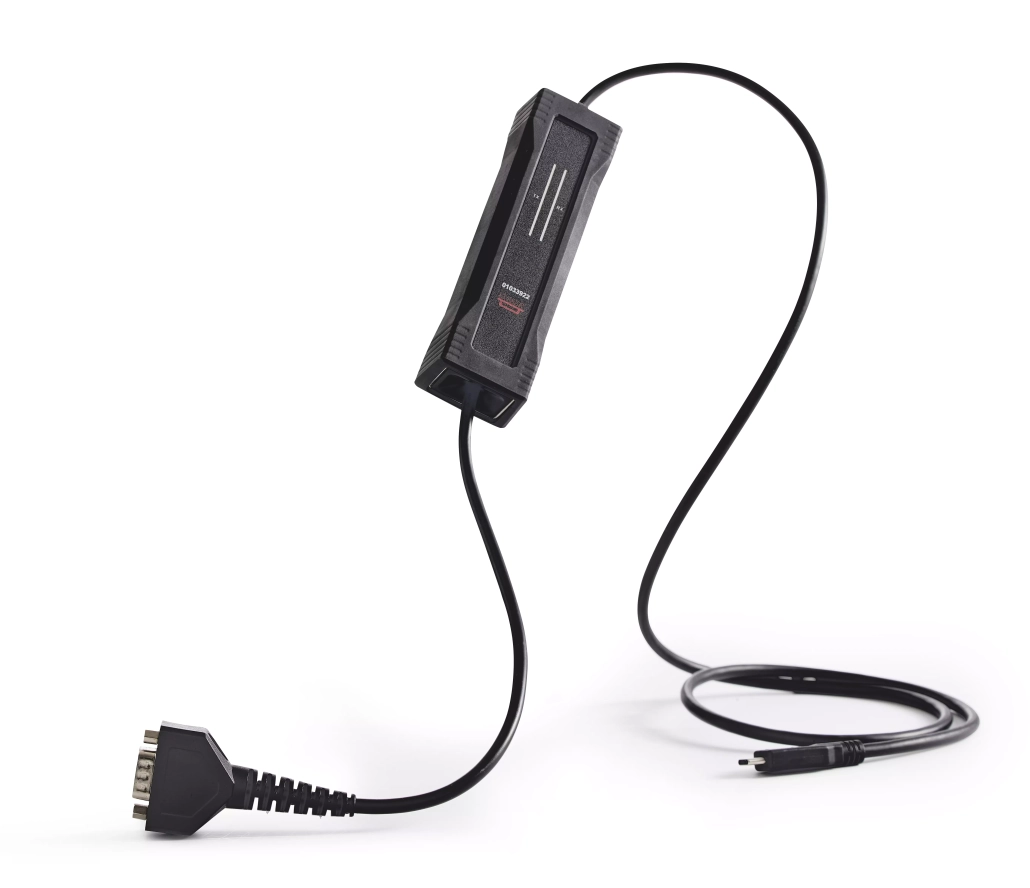
Yes, the U100 fully supports both CAN FD and classical CAN protocols, making it a versatile solution for modern industrial and automotive applications. This compact USB interface handles data rates up to 8 Mbps for CAN FD and up to 1 Mbps for classical CAN, providing excellent backward compatibility while supporting next-generation CAN communications. With its rugged design and flexible protocol support, the U100 serves as an ideal bridge between CAN networks and computers for testing, monitoring, and development purposes.
What is the Kvaser U100 product line and its variants?
The Kvaser U100 product line comprises a family of compact, high-performance CAN bus interfaces designed for connecting computers to CAN networks via USB. The core lineup includes the standard U100, the U100P with enhanced galvanic isolation, and the U100-C with alternative connector options.
Each variant shares the same fundamental architecture while offering specific enhancements for different use cases. The standard U100 provides an excellent entry point with its USB 2.0 High Speed interface and single CAN channel. The U100P adds 1000 V galvanic isolation for enhanced protection in electrically noisy environments, while the U100P-X extends this with even greater isolation capabilities.
All models feature Kvaser’s proprietary CAN controller technology, ensuring reliable communication even in demanding industrial settings. Their compact form factor (approximately 50 × 90 × 25 mm) makes them highly portable whilst maintaining robust construction. These interfaces are particularly valuable for automotive testing, industrial automation, and embedded systems development where reliable CAN communication is essential.
Does the U100 support CAN FD and classical CAN?
Yes, the U100 family fully supports both CAN FD (Flexible Data-rate) and classical CAN protocols. This dual compatibility represents one of the product line’s key advantages, allowing users to work with both legacy systems and modern high-speed networks using a single interface.
For classical CAN, the U100 supports standard data rates up to 1 Mbps with the traditional 11-bit and extended 29-bit identifiers. When operating with CAN FD, the device handles the protocol’s two-phase transmission with arbitration phase rates matching classical CAN and data phase rates up to 8 Mbps. This allows for significantly larger data payloads (up to 64 bytes versus the 8-byte limit of classical CAN) and much faster data transfer.
The seamless support for both protocols proves particularly valuable in environments where engineers need to test or integrate with mixed networks. For instance, in automotive applications where newer ECUs may use CAN FD while older components rely on classical CAN, the U100 can communicate with all parts of the system without requiring multiple interfaces.
If you’re interested in seeing how these capabilities translate to real-world applications, we encourage you to explore our case studies showcasing implementations across various industries.
How does the U100 perform in harsh environments?
The U100 series is engineered specifically for reliable operation in harsh industrial and automotive environments. With an operating temperature range of -40°C to +85°C, these interfaces can function in everything from cold storage facilities to hot engine compartments without performance degradation.
The devices feature comprehensive electromagnetic protection, with the U100P and U100P-X models offering enhanced galvanic isolation (1000 V) to prevent ground loops and protect connected equipment from voltage spikes. This isolation proves crucial in industrial settings where electrical noise can otherwise compromise communication integrity.
Physical durability is another key consideration in the U100 design. The robust housing provides mechanical protection against impacts and vibration, while connector options are selected for reliability in challenging conditions. The standard D-sub 9-pin connector offers a secure connection, while the U100-C variant provides alternative connector options for specialized applications.
IP ratings vary by model, but all units are designed to resist dust and moisture ingress appropriate to their intended operating environments. This makes the U100 series suitable for use in manufacturing plants, vehicle test benches, and field service applications where environmental conditions cannot be carefully controlled.
What are the power requirements and software compatibility of the U100 series?
The U100 series draws power directly from the USB connection, requiring no external power supply for normal operation. This USB-powered design enhances portability and simplifies deployment, as the interfaces can be quickly connected to any computer with a standard USB port.
Power consumption is modest, with typical draw under 200 mA at 5V (USB power), allowing the devices to function reliably even when connected to laptops or systems with limited power budgets. The interfaces also incorporate power management features to optimize energy usage based on activity levels.
On the software side, Kvaser provides comprehensive driver support across multiple operating systems, including Windows, Linux, and macOS. The Kvaser CANlib SDK offers a consistent API across all Kvaser interfaces, simplifying development and allowing code to be portable between different hardware models.
The interfaces work with numerous industry-standard CAN tools and environments, including Vector CANalyzer, ETAS INCA, and National Instruments LabVIEW. This broad compatibility ensures the U100 series can integrate smoothly into existing development workflows and testing procedures without requiring significant changes to established processes.
How can the U100 integrate with embedded systems like Raspberry Pi?
Integrating the U100 with embedded systems like Raspberry Pi is straightforward due to its USB connectivity and comprehensive Linux driver support. For Raspberry Pi specifically, the process begins with installing the necessary Linux drivers, which are freely available from Kvaser’s developer website.
The integration process typically follows these steps:
- Install the Kvaser Linux driver package on the Raspberry Pi
- Connect the U100 device to a USB port on the Raspberry Pi
- Verify device recognition using terminal commands
- Implement CAN communication using the Kvaser CANlib API
Python developers can utilize the Kvaser CANlib wrapper to create applications that interact with CAN networks. This provides a high-level interface for sending and receiving CAN messages, configuring bus parameters, and handling events.
The low power requirements of the U100 make it particularly suitable for embedded applications where energy efficiency is important. Additionally, the device’s compact size allows it to be integrated into space-constrained embedded systems without requiring significant modifications to existing hardware layouts.
Common applications include creating low-cost CAN monitoring stations, developing IoT gateways that bridge CAN networks with internet protocols, and building diagnostic tools that leverage the processing capabilities of embedded Linux systems.
Key takeaways about Kvaser U100 CAN capabilities
The Kvaser U100 product line delivers exceptional versatility through its support for both CAN FD and classical CAN protocols. This dual compatibility enables users to work with legacy systems while being prepared for newer high-speed applications, making the U100 a future-proof investment for CAN development and testing needs.
The environmental resilience of these interfaces, particularly the galvanically isolated variants, ensures reliable operation even in electrically noisy industrial settings. Combined with broad temperature tolerance and physical durability, this makes the U100 series suitable for deployment beyond controlled laboratory environments.
For software development, the consistent API across operating systems and compatibility with industry-standard tools streamlines integration into existing workflows. The ability to easily connect with embedded systems like Raspberry Pi further extends the versatility of these interfaces, enabling cost-effective solutions for monitoring, gateway, and test applications.
When selecting the appropriate variant, consider your specific requirements:
- Standard U100 for general purpose applications in controlled environments
- U100P for applications requiring galvanic isolation
- U100P-X for environments with extreme electrical noise
- U100-C for applications requiring alternative connector options
With their combination of protocol flexibility, environmental durability, and software compatibility, the Kvaser U100 interfaces represent a comprehensive solution for modern CAN bus requirements across industrial, automotive, and embedded applications.