
What are the main use cases for Influx technology?
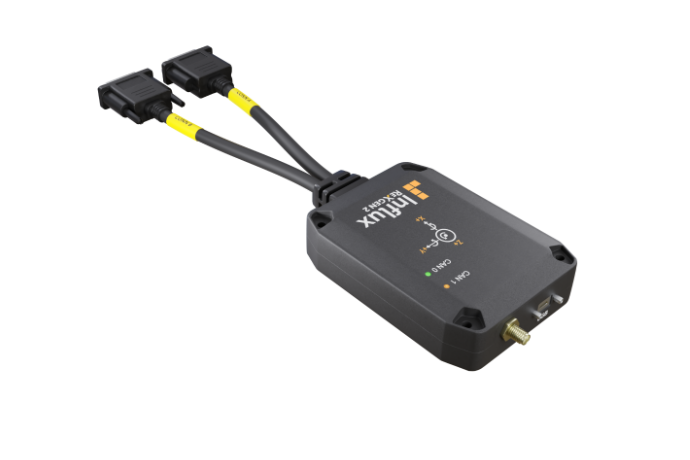
Influx technology is primarily used for advanced data logging and analysis in professional environments requiring comprehensive system diagnostics. The main use cases include vehicle testing and development, industrial equipment monitoring, fleet management, real-time system diagnostics, and performance analysis. Influx tools excel particularly in CAN bus environments where capturing, storing, and analyzing complex data streams is essential for troubleshooting, optimisation, and system improvement. Their compatibility with industry-standard hardware like Kvaser interfaces and support for GPS/IMU integration makes them especially valuable for applications requiring contextual data correlation across multiple parameters.
Understanding Influx technology: An introduction to data logging solutions
Influx technology represents a sophisticated suite of data logging solutions designed specifically for capturing, storing, and analyzing complex system data in real-time environments. At its core, Influx provides comprehensive monitoring capabilities that enable engineers and technicians to gather critical operational information from various industrial and vehicular systems.
The technology is built around robust data acquisition hardware that interfaces seamlessly with CAN bus networks, the nervous system of modern vehicles and industrial equipment. This allows for non-intrusive monitoring of system parameters without disrupting normal operations.
What distinguishes Influx from conventional logging tools is its ability to handle high-speed data streams whilst maintaining precision and reliability. The technology captures time-stamped data points with millisecond accuracy, essential for diagnosing intermittent issues or correlating events across multiple systems.
As industrial and vehicular systems grow increasingly complex, Influx technology has become indispensable for development teams, maintenance operations, and quality assurance processes where data-driven insights drive critical decisions and improvements.
What are the primary applications for Influx data logging tools?
The primary applications for Influx data logging tools span across several professional domains where precise data capture and analysis are mission-critical. Vehicle development and testing represents one of the most significant use cases, where engineers utilize these tools to monitor CAN bus traffic during prototype evaluation, allowing them to verify system performance under various operating conditions.
Fleet management operations benefit substantially from Influx technology by enabling continuous monitoring of vehicle health across entire fleets. This proactive approach helps identify potential issues before they cause breakdowns, optimising maintenance schedules and reducing costly downtime.
Industrial equipment monitoring represents another key application, where Influx loggers provide insights into machine performance, helping maintenance teams detect anomalies in operational parameters that might indicate impending failures.
Diagnostic troubleshooting is perhaps the most common daily use case, with technicians deploying Influx tools to capture system data during fault conditions. This allows them to analyse the precise sequence of events leading to failures, significantly reducing diagnostic time.
Research and development teams also rely on Influx technology to gather real-world performance data that informs design improvements and validates theoretical models. We invite you to explore our Case study section for real-world examples of these applications in action.
How does Influx ReXgen enhance CAN bus diagnostics?
Influx ReXgen significantly enhances CAN bus diagnostics through its advanced capabilities designed specifically for professional environments. The system offers trigger-based logging functionality that allows engineers to capture data only when specific conditions occur, conserving storage space while ensuring all relevant events are recorded.
Memory options in the ReXgen series provide flexibility based on application requirements. Models range from basic configurations with sufficient storage for typical diagnostic sessions to advanced variants with expanded memory for long-term monitoring or high-speed data acquisition scenarios.
One of ReXgen’s most valuable features is its ability to simultaneously monitor multiple CAN channels, capturing synchronised data across different systems. This multi-channel capability proves invaluable when diagnosing complex interactions between interconnected control units or when comparing performance across redundant systems.
The integration capabilities with existing diagnostic systems allow ReXgen to complement rather than replace current toolchains. It can function alongside proprietary diagnostic equipment, providing additional data capture capabilities without disrupting established workflows.
ReXgen also supports industry-standard DBC files, enabling automatic decoding of CAN messages into human-readable parameters. This eliminates the time-consuming task of manual signal interpretation and allows for immediate analysis of system behaviour in engineering units rather than raw hexadecimal values.
ReXgen 2 IMU
What makes Influx technology compatible with Kvaser hardware?
Influx technology achieves seamless compatibility with Kvaser hardware through deliberately engineered integration that maximises the strengths of both systems. This compatibility stems from adherence to standardised CAN protocols and interfaces, ensuring reliable data exchange between Influx logging software and Kvaser’s industry-leading CAN interfaces.
The connection methods between Influx tools and Kvaser hardware are straightforward, typically utilizing USB or Ethernet connections that enable plug-and-play functionality with minimal configuration requirements. This simplicity reduces setup time and eliminates potential connection errors in field environments.
Synchronisation capabilities represent a particularly valuable aspect of this compatibility. Influx software can precisely time-stamp data from multiple Kvaser interfaces, ensuring that information captured across different CAN channels maintains temporal alignment—essential for correlation analysis in complex systems.
Performance benefits emerge from this partnership, with Kvaser’s reliable hardware handling the physical layer communication whilst Influx software manages data processing, filtering, and storage. This division of labour optimises system resources and ensures consistent performance even under high bus load conditions.
Driver integration between the two technologies is maintained through regular updates, ensuring compatibility with the latest Kvaser hardware releases and leveraging new features as they become available.
How can GPS and IMU support improve data logging accuracy?
GPS and IMU support dramatically improve data logging accuracy by providing crucial contextual information that enhances the analytical value of CAN bus data. The integration of these technologies enables precise correlation between vehicle behaviour and geographic location, creating a comprehensive picture of system performance under varying conditions.
Location tracking capabilities allow engineers to map specific vehicle responses to road features, terrain changes, or environmental conditions. This geographical context often reveals patterns that would otherwise remain invisible in raw data logs, such as performance variations at specific altitudes or during particular manoeuvres.
The Inertial Measurement Unit (IMU) adds another dimension by capturing detailed movement data including acceleration, braking forces, yaw rates, and vibration profiles. This information proves invaluable when diagnosing handling characteristics, suspension performance, or stability control systems.
Environmental context becomes significantly richer with GPS/IMU integration. Engineers can correlate system parameters with specific driving scenarios, distinguishing between behaviours that occur during highway cruising versus city traffic or during aggressive versus conservative driving styles.
Beyond diagnostics, this enhanced data supports advanced development applications including autonomous driving systems, where precise positioning and movement data are essential for algorithm training and validation. The timestamp synchronisation between GPS/IMU data and CAN messages ensures that all information sources remain perfectly aligned for accurate analysis.
Key takeaways: Maximising the value of Influx technology in professional environments
To maximise the value of Influx technology in professional environments, organisations should focus on strategic implementation tailored to their specific industry requirements. For vehicle manufacturers and suppliers, integrating Influx tools into the development workflow early in the product lifecycle yields the greatest benefits, enabling data-driven design decisions and reducing costly late-stage modifications.
Effective implementation strategies vary by sector. Fleet operators benefit most from establishing baseline performance metrics for each vehicle type, then configuring automated alerts when deviations occur. Manufacturing facilities should focus on integrating Influx data with production metrics to correlate system performance with output quality.
Cross-functional team training represents another critical success factor. When both engineering and maintenance personnel understand how to configure logging parameters and interpret results, organisations achieve faster problem resolution and more effective knowledge sharing.
Data management practices significantly impact long-term value. Establishing consistent logging protocols, file naming conventions, and archival procedures ensures that historical data remains accessible and useful for trend analysis and comparison against current performance.
Perhaps most importantly, organisations achieve the greatest return when they view Influx technology not merely as a troubleshooting tool but as a continuous improvement platform. By regularly analysing logged data for optimisation opportunities, even in seemingly well-functioning systems, companies can identify incremental improvements that collectively deliver substantial performance gains and operational efficiencies.