Why choose Kvaser over other CAN hardware solutions?
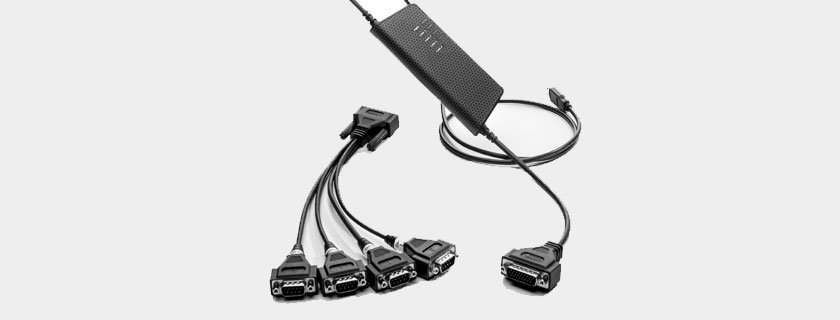
Kvaser stands out in the CAN hardware solutions market due to its exceptional commitment to quality, comprehensive product range, and robust technical specifications. The Swedish manufacturer has built a reputation for producing reliable, high-performance CAN interfaces that deliver superior connectivity and data integrity across automotive, industrial, and embedded applications. What truly distinguishes Kvaser is its combination of hardware durability, extensive software compatibility, and commitment to providing complete solutions rather than mere components. For organisations requiring dependable CAN bus communication technology, Kvaser offers a compelling package of technical excellence, compatibility, and versatility.
Understanding Kvaser’s position in the CAN hardware market
Kvaser has established itself as a premier provider in the CAN hardware market, known for developing high-quality interfaces and solutions for Controller Area Network (CAN) systems. Founded in 1983, the company brings decades of specialised expertise in CAN bus technology.
CAN bus technology serves as a robust communication protocol that allows microcontrollers and devices to communicate without a host computer. Originally developed for automotive applications, CAN has expanded into industrial automation, medical equipment, and various embedded systems due to its reliability and noise resistance.
What positions Kvaser uniquely in this market is their specialised focus on CAN technology. Unlike competitors who may offer CAN solutions as just one part of their broader product catalogue, Kvaser has dedicated their engineering resources specifically to perfecting CAN interfaces. This concentration has allowed them to develop deeper expertise and more refined products compared to manufacturers with more diversified product lines.
Kvaser’s market position is further strengthened by their comprehensive approach to CAN solutions, offering not just hardware but complete ecosystems including software development kits, programming support, and technical resources that create a complete development environment.
What makes Kvaser CAN interfaces technically superior?
Kvaser CAN interfaces deliver technical superiority through several key specifications that outperform many competing solutions. The most immediately noticeable advantage is Kvaser’s exceptional data transmission capabilities, with interfaces supporting both Classical CAN (up to 1 Mbit/s) and CAN FD (up to 8 Mbit/s), ensuring optimal performance across different application requirements.
Error handling represents another area where Kvaser excels. Their interfaces implement sophisticated error detection mechanisms that identify and manage transmission issues without requiring host computer intervention. This autonomous error management significantly reduces the processing burden on the main system while enhancing data integrity.
Buffer architecture plays a crucial role in CAN communication efficiency. Kvaser’s hardware features generous buffer sizes that prevent data loss during high-traffic scenarios. This becomes particularly important in applications where missing a single message could have significant consequences.
The physical construction quality of Kvaser interfaces deserves special mention. Their hardware is designed to withstand challenging environments, including temperature extremes, vibration, and electromagnetic interference. This durability translates to longer service life and more consistent performance compared to many alternatives that may experience degradation under similar conditions.
Finally, Kvaser’s hardware maintains exceptional clock accuracy, which is essential for timestamping and synchronisation in distributed systems. This precision timing capability ensures reliable communication in time-sensitive applications where message sequencing is critical.
How does Kvaser’s software compatibility compare to alternatives?
Kvaser offers exceptional software compatibility that outshines many competitors through its comprehensive driver support and versatile API ecosystem. Their interfaces work seamlessly across Windows, Linux, and macOS platforms, eliminating the operating system restrictions that plague some alternative solutions.
The programming language support provided by Kvaser is particularly impressive. Developers can utilise Kvaser’s interfaces with Python, C++, C#, Java, and LabVIEW, among others. This extensive language compatibility provides flexibility that many competing solutions cannot match, allowing development teams to work in their preferred programming environment rather than adapting to limited options.
Kvaser’s API design philosophy emphasises both power and simplicity. Their interfaces provide low-level access for developers requiring precise control while simultaneously offering high-level functions that simplify common tasks. This dual-layer approach contrasts favourably with competitors that often force developers to choose between simplicity and control.
Another significant advantage is Kvaser’s commitment to backward compatibility. New Kvaser hardware typically works with existing code, protecting development investments when upgrading hardware. This contrasts with some competitors whose new hardware generations may require substantial code rewrites.
For those interested in seeing practical implementations, our case studies demonstrate how this compatibility advantage translates to real-world development efficiency.
What are the real-world performance differences between Kvaser and competitors?
In real-world applications, Kvaser interfaces demonstrate several significant performance advantages over competing solutions. Latency characteristics represent one of the most notable differences, with Kvaser hardware consistently delivering more predictable response times under varying load conditions compared to many alternatives.
Reliability in harsh environments is another area where the practical difference becomes apparent. Automotive applications particularly benefit from Kvaser’s robust design, which maintains consistent performance despite temperature fluctuations, vibration, and electrical noise that often degrade competitor hardware performance over time.
The long-term stability of Kvaser interfaces in continuous operation scenarios provides another meaningful advantage. Systems running 24/7 in industrial settings show fewer communication errors and require less maintenance when using Kvaser hardware compared to many alternatives that may develop timing inconsistencies or require more frequent restarts.
Data integrity during high-traffic periods also differentiates Kvaser in practical use. Their intelligent buffer management and efficient handling of message prioritisation prevent data loss during peak communication periods, ensuring critical messages are delivered even when the bus is saturated.
For embedded applications with power constraints, Kvaser’s efficient power management delivers reliable performance while consuming less energy than many competing interfaces, extending battery life in portable systems and reducing heat generation in enclosed environments.
How does Kvaser’s product range address different implementation needs?
Kvaser’s diverse product lineup offers tailored solutions for varied implementation requirements, from basic to advanced applications. This range breadth allows organisations to select the exact interface that matches their technical needs and budget constraints without overpaying for unnecessary features.
For entry-level needs, Kvaser’s Leaf Light v2 provides an accessible starting point with USB connectivity and reliable performance for development and less demanding applications. This contrasts favourably with competitors whose entry-level offerings often sacrifice reliability for cost reduction.
Mid-range implementations benefit from Kvaser’s Eagle interfaces, which deliver expanded capabilities including multiple channels and additional I/O options. The Eagle series bridges the gap between basic and advanced requirements, providing a scalable pathway as projects evolve—flexibility that many competing product lines lack.
The most demanding applications find solutions in Kvaser’s professional-grade interfaces like the Memorator Pro and Kvaser USBcan Pro. These devices offer advanced features including standalone logging, programmable scripting, and sophisticated filtering capabilities that outclass many competitors’ premium offerings.
Kvaser’s product range also addresses different physical form factors and connection types, from USB devices to PCI cards, Ethernet interfaces, and embedded solutions. This variety ensures that regardless of the physical constraints of an implementation, a suitable Kvaser solution exists—versatility not universally available from competing manufacturers.
Key takeaways: Making an informed decision on CAN hardware
When selecting CAN hardware, Kvaser offers several distinct advantages worth considering for your implementation. The technical superiority of their interfaces—featuring exceptional transmission rates, robust error handling, and generous buffer sizes—provides a solid foundation for reliable communication systems.
The extensive software compatibility across operating systems and programming languages means development teams can work efficiently in their preferred environments without technical limitations. This compatibility reduces development time and maintains code investment when hardware upgrades become necessary.
Real-world performance differences become particularly evident in demanding applications, where Kvaser’s consistent reliability in harsh conditions and long-term stability during continuous operation deliver tangible operational benefits compared to alternatives.
The comprehensive product range ensures organisations can find precisely the right solution for their specific needs—from simple monitoring applications to complex multi-channel systems requiring advanced features. This scalability allows systems to evolve without complete hardware replacement.
When making your decision, consider not just current requirements but future expansion needs. Kvaser’s commitment to backward compatibility and consistent API design protects development investments and simplifies system growth. For organisations requiring dependable CAN communication technology, Kvaser’s combination of technical excellence, software compatibility, and product diversity creates a compelling advantage over competing solutions.