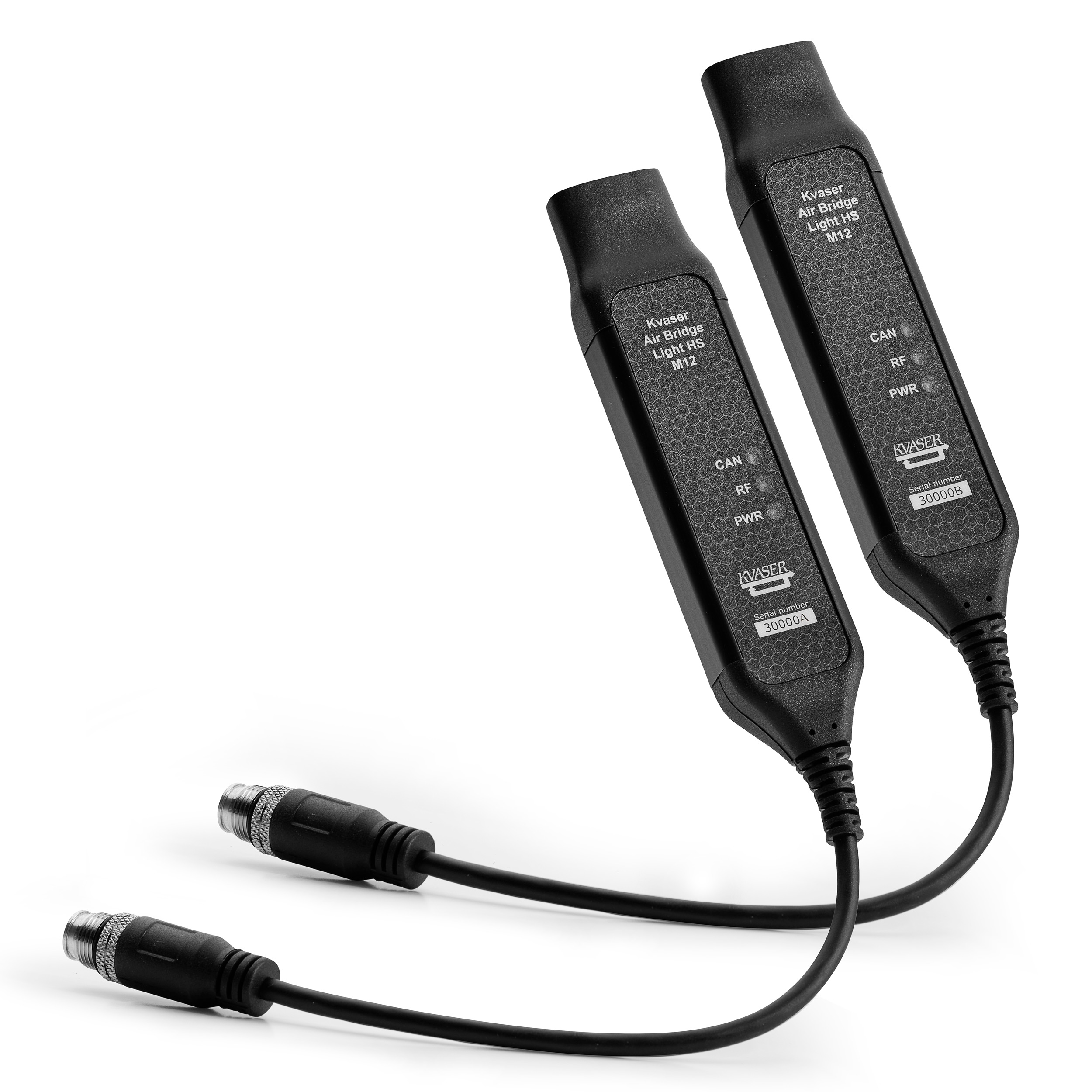
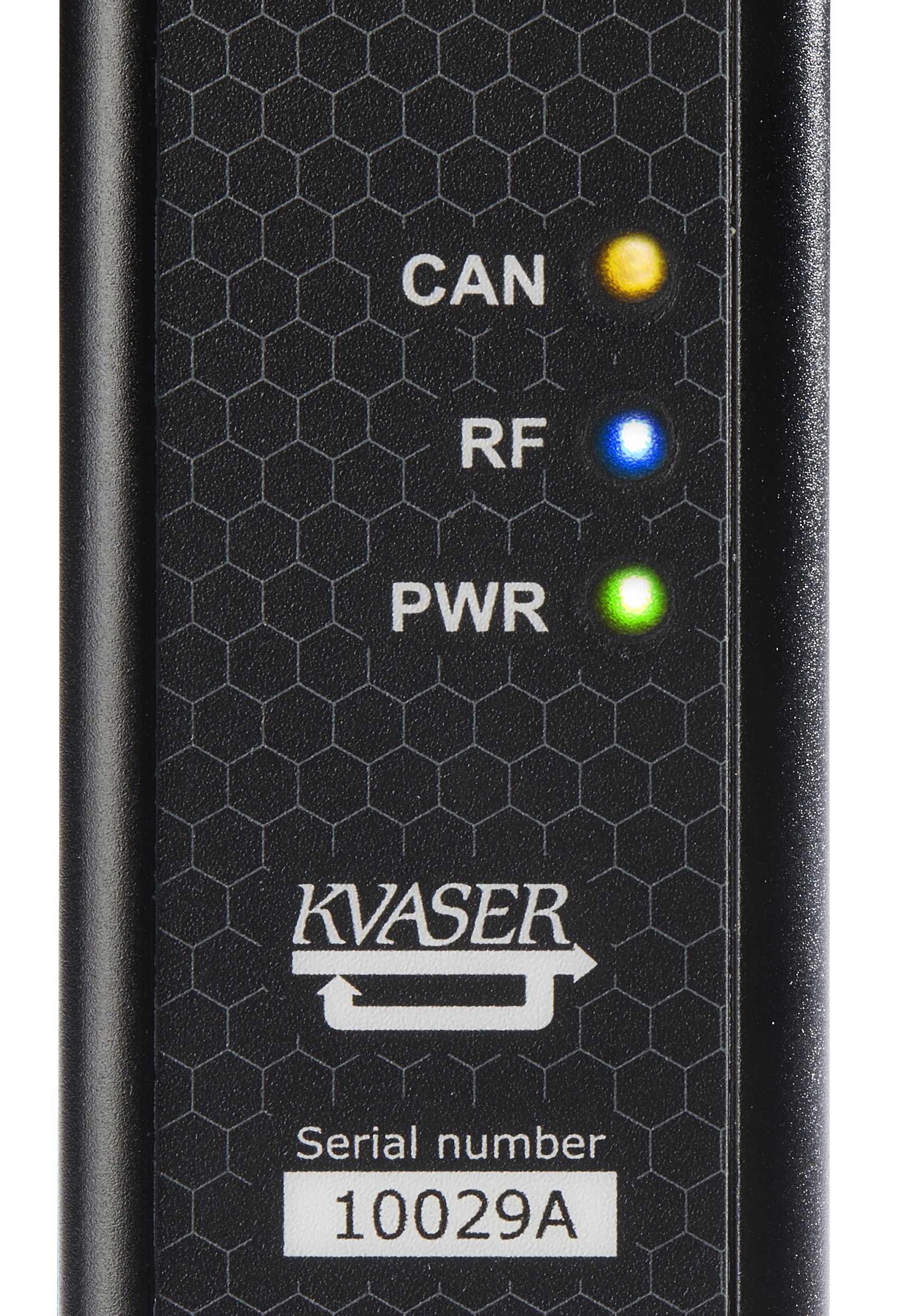
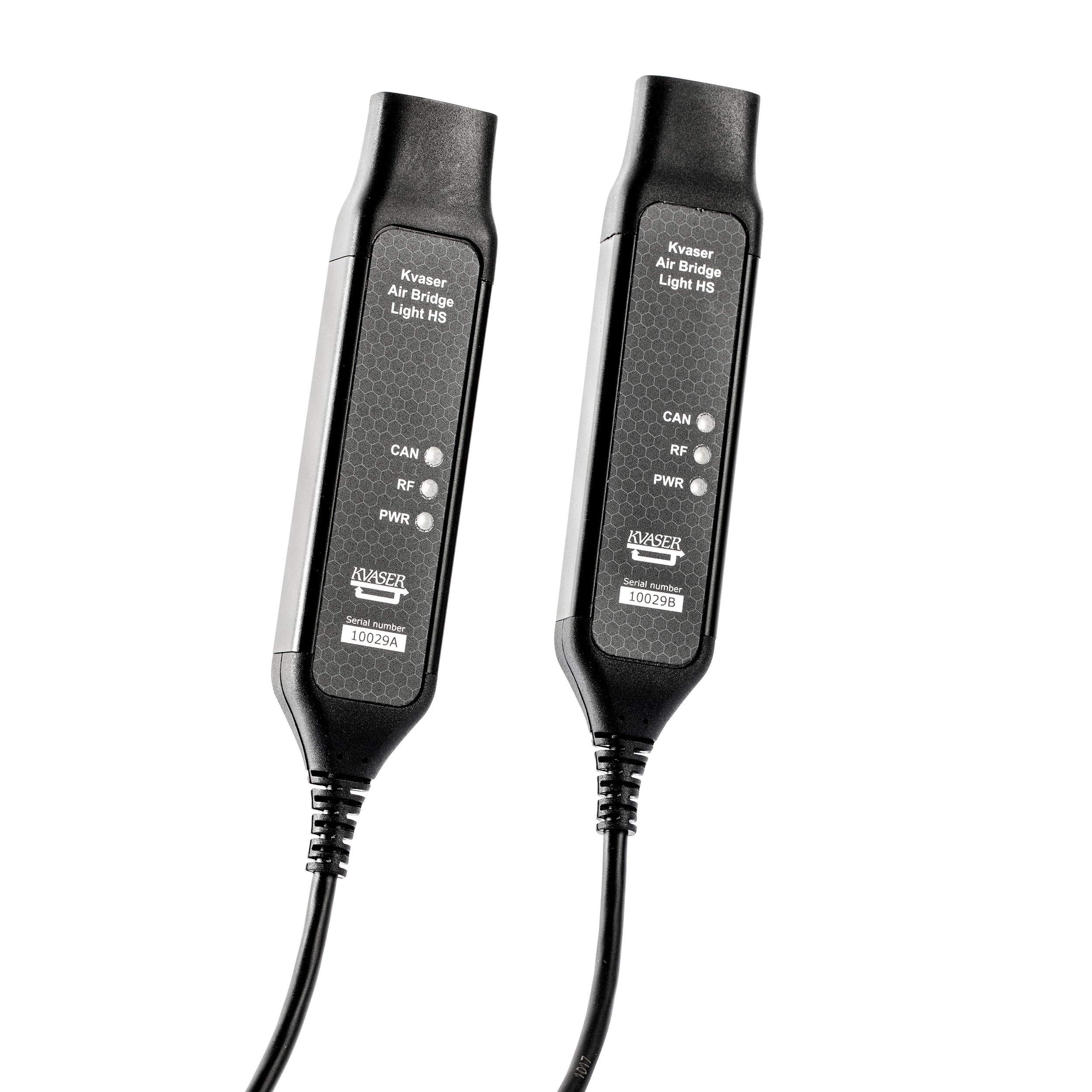



Configuration-free wireless CAN bridge, with M12 connector
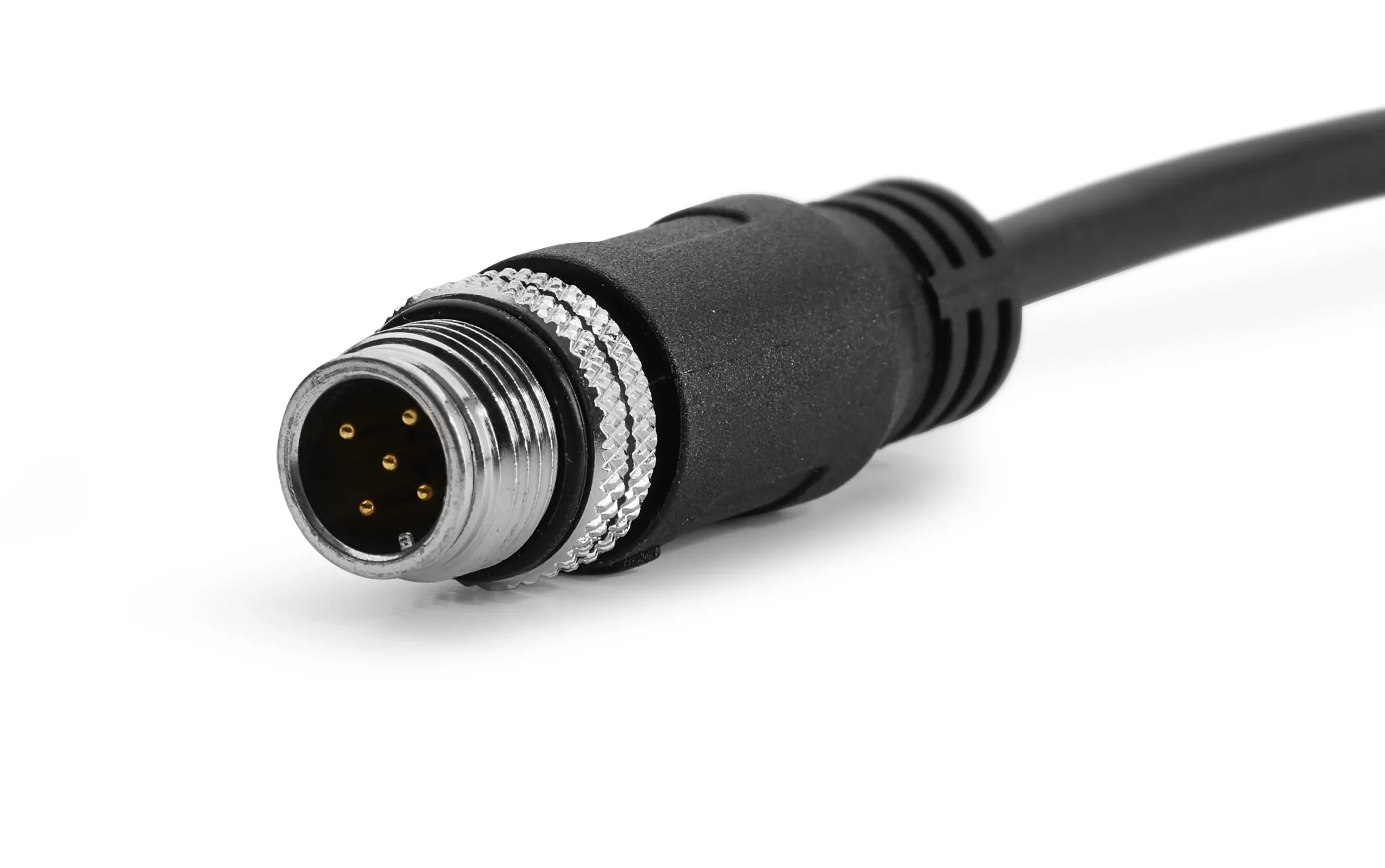
The Kvaser Air Bridge Light HS M12 is a configuration-free wireless CAN bridge that uses a dust and water-tight M12 connector to connect CAN networks. It provides a uniquely low and predictable latency compared to other wireless technologies and a highly robust signal even at long range.
Kvaser Air Bridge Light HS M12 includes a preconfigured pair of plug-and-play units with built-in antennas and rugged housings. It enables fast and reliable CAN data transfer in applications where wired connections are difficult, such as between moving or rotating machines. This configuration-free wireless CAN bridge features an M12 connector and is certified for use in both the EU and US.
Kvaser Air Bridge Light HS M12 uses a 2.4 GHz wireless technology to provide stable communication with predictable latency, without sacrificing stability or range. This ensures reliable and timely CAN data transfer, even in demanding environments. It is well suited for control systems where accurate message timing is important and can be used as an alternative to optical cables in some applications.
Overview
- Wireless CAN Bridge: Creates a point-to-point radio link between two CAN networks
- Plug-and-Play Operation: No configuration or drivers required
- Low Latency Communication: Predictable and stable data transmission
- Rugged Design: Aluminum housing with IP65 rating and M12 connector (IP67) for harsh environments
- High-Speed CAN Support: Up to 1 Mbit/s (ISO 11898-2 compliant)
- Automatic Bit Rate Detection: Supports 125 kbit/s to 1 Mbit/s
- Wide Protocol Compatibility: Supports CAN, CANopen, J1939, NMEA 2000, and DeviceNet
Functionality
Kvaser Air Bridge Light HS M12 units automatically establish a wireless connection using a proprietary 2.4 GHz protocol with frequency hopping, ensuring stable communication and resistance to interference.
Once connected, CAN messages are transmitted transparently between the two networks, allowing systems to communicate as if they were physically connected. This makes the solution suitable for moving machinery, rotating equipment, and installations where cabling is difficult or unreliable. Ideal for engineers and system integrators who need a robust and easy-to-deploy wireless CAN connection in demanding industrial environments where cables are impractical or unreliable.
Major Features
- A preconfigured pair of units that create a point-to-point radio link between two CAN networks.
- 2.4 GHz proprietary protocol.
- Internal antenna design, antenna output power max 18 dBm.
- Automatic baud rate detection (125K, 250K, 500K, 1M).
- Supports both 11-bit (CAN 2.0A) and 29-bit (CAN 2.0B active) identifiers.
- High-Speed CAN connection (compliant with ISO 11898-2), up to 1 Mbit/s.
- Power supplied through the CAN bus interface.
- Rugged aluminum housing.
- Dust and water-resistant M12 connector on each unit.
- Plug and play, driver-free, and configuration-free.
- Fully compatible with J1939, CANopen, NMEA 2000 and DeviceNet.
- Extended operating temperature range from -40 to +70 °C.
Typical Applications
- Communication between moving or rotating machine parts
- Industrial automation and control systems
- Heavy-duty vehicles and mobile machinery
- Harsh environments where cabling is exposed to wear
- Replacement for wired or fiber connections in certain use cases